 School






World Language Lesson Planning: Start With What Students Will Do
Plan coherent world language lessons with Can-Do goals, backward design, purposeful input, practice and a final communicative task.
Grade 9 School brings curriculum, lesson planning, practice, homework, feedback, live activities, printables and progress tracking into one connected teaching workflow.
 Spanish
 French
 German
 Portuguese
 Italian
Practice, feedback and progress in one place.

A lesson can contain excellent activities and still feel random.
Warm-up. Vocabulary game. Grammar notes. Listening. Partner task. Exit ticket.
Each piece may be useful on its own, but the lesson becomes stronger when the parts prepare students for the same outcome.
ACTFL identifies backward design as a guiding principle for language instruction. New York State’s World Languages lesson-planning guidance similarly asks teachers to connect standards, lesson Can-Do statements, acceptable evidence, resources, differentiation and instructional sequence.
You do not need a complicated template to use that principle.
You need a clear answer to one question:
What should students be able to do with the language by the end of this lesson?
Explore the topic ↓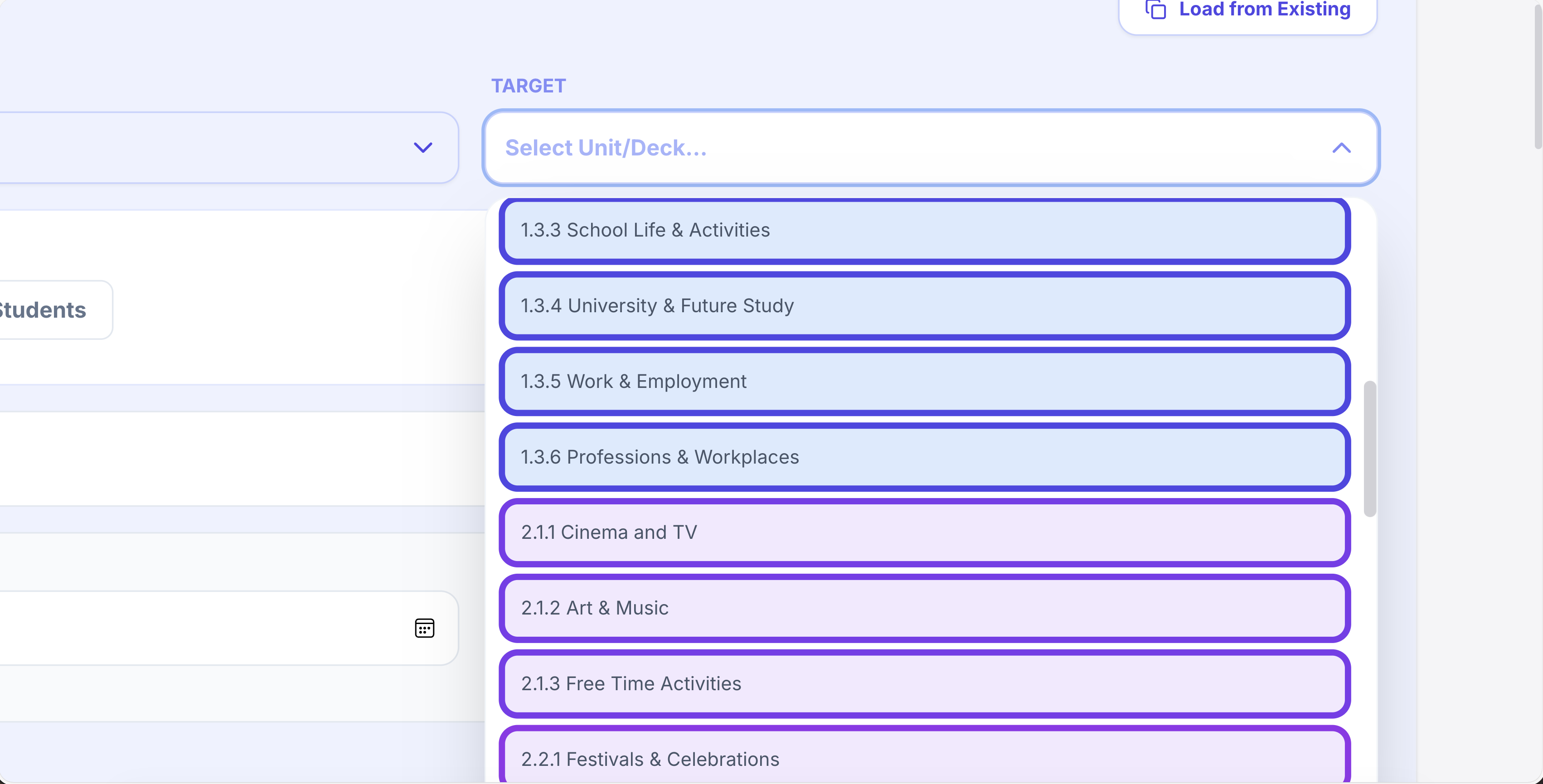
One platform for teaching, practice, feedback and progress.
Plan lessons, set homework, run live activities, generate printables, give AI-supported grading and track progress across Spanish, French, German, Portuguese and Italian.
Writing & speaking grading
Set writing and speaking tasks, collect submissions, generate detailed feedback and keep teacher review in the loop.
Explore this guide →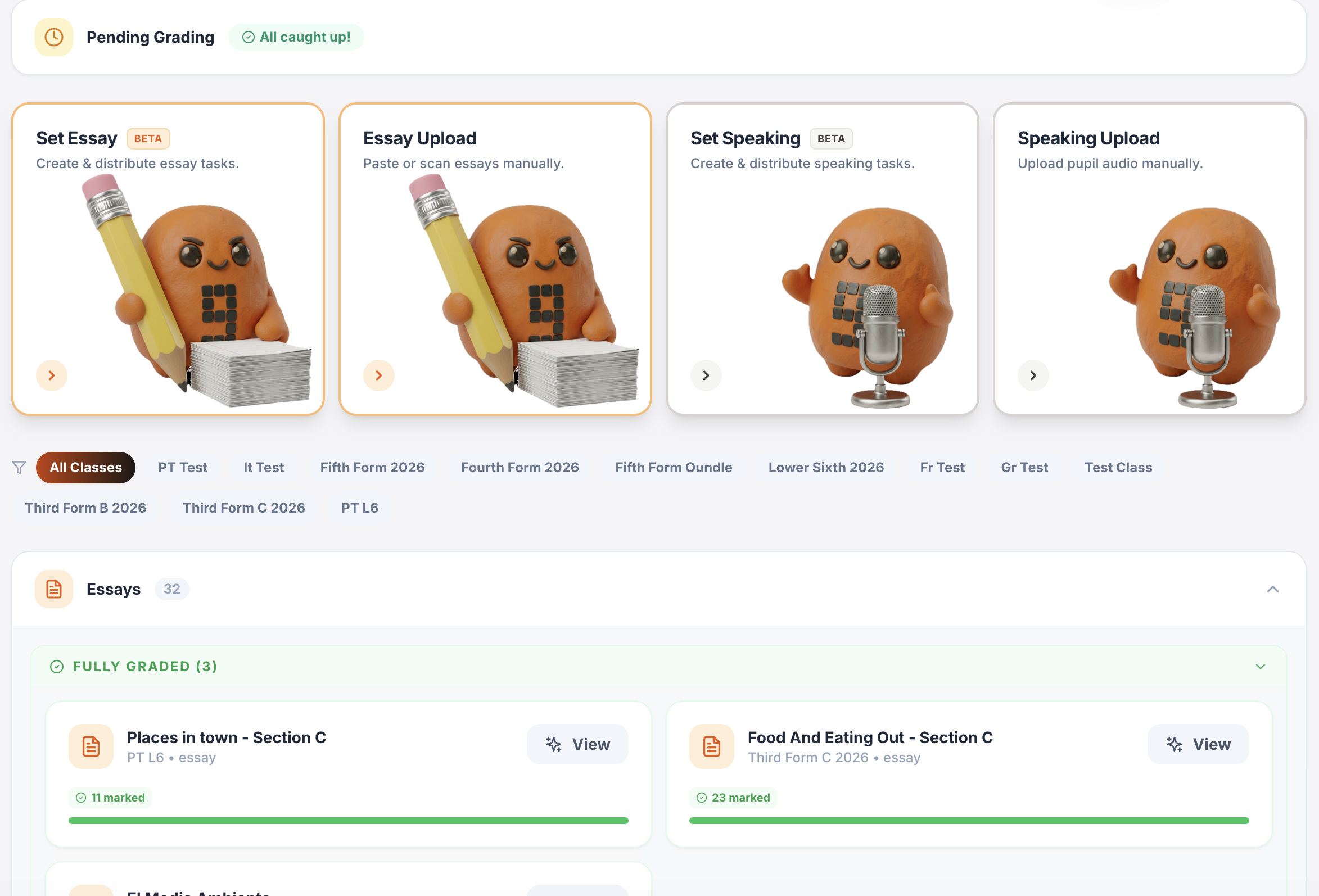
Gradebook & reports
Track scores, completion, engagement and learning evidence across classes.
Explore this guide →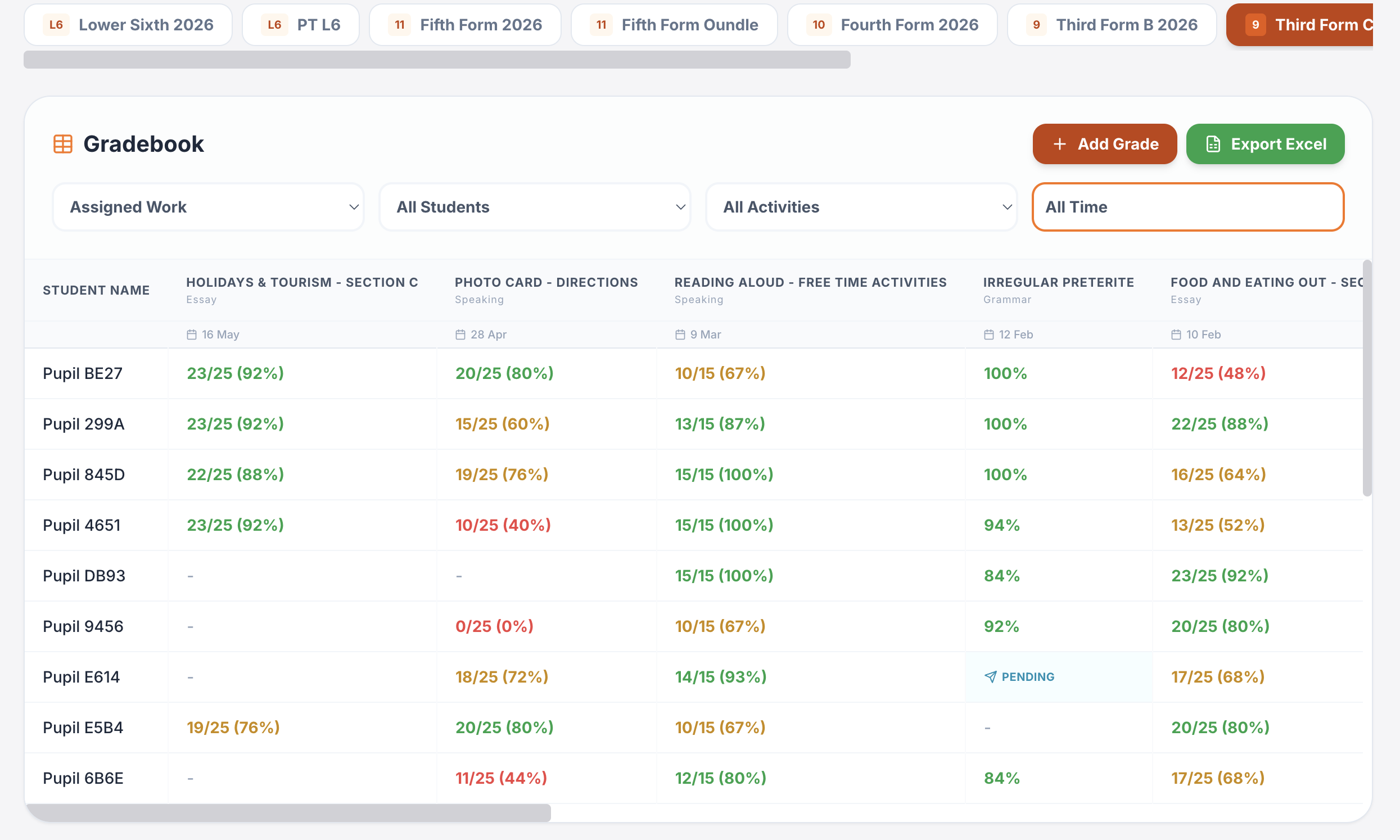
Interactive lessons
Generate, edit, save and reuse complete lesson presentations.
Explore this guide →Printables in seconds
Vocabulary, grammar, translation, reading, listening, worksheets and booklets.
Explore this guide →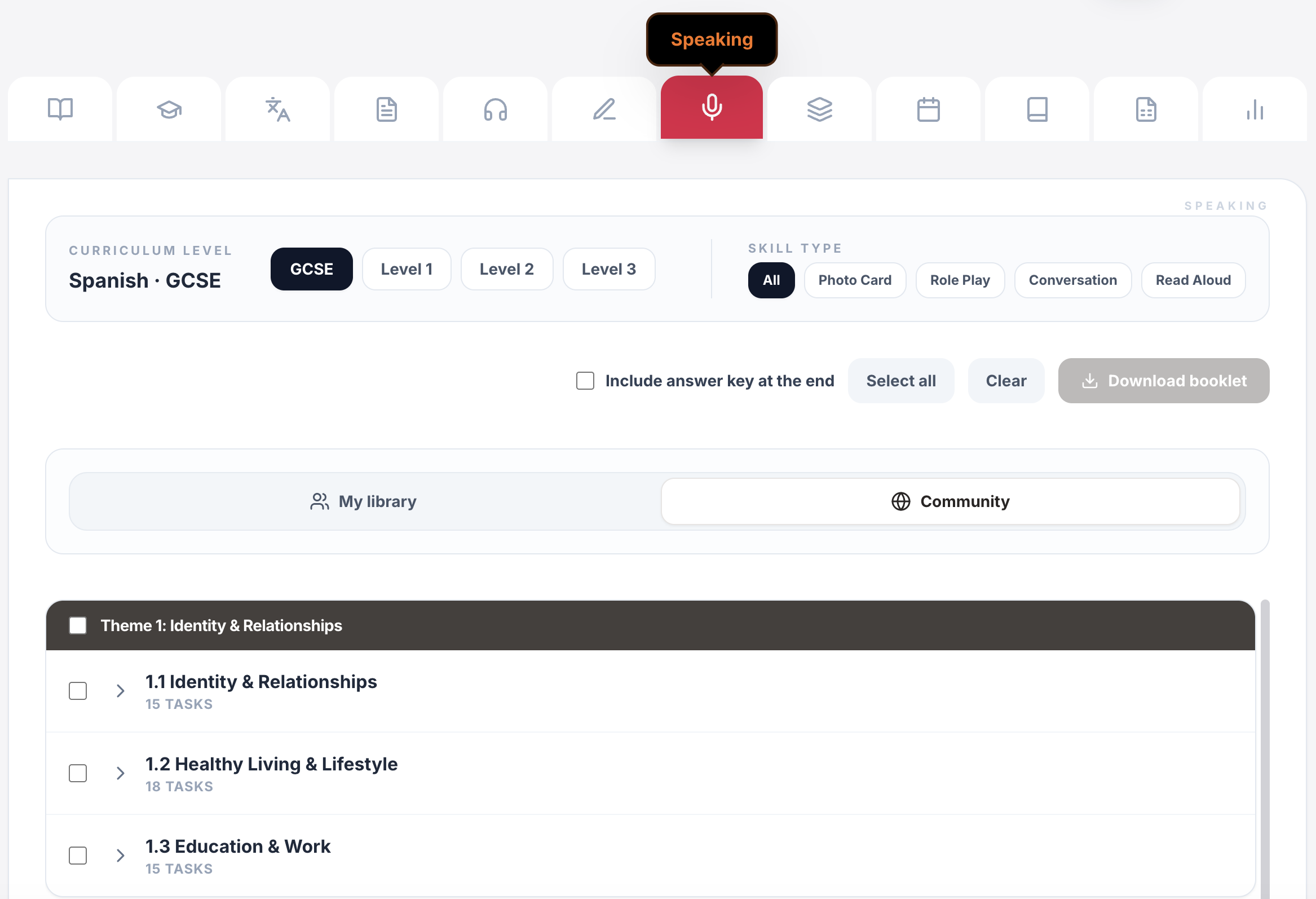
Live games & whiteboards
Turn curriculum content into whole-class competition, retrieval and live response.
Explore this guide →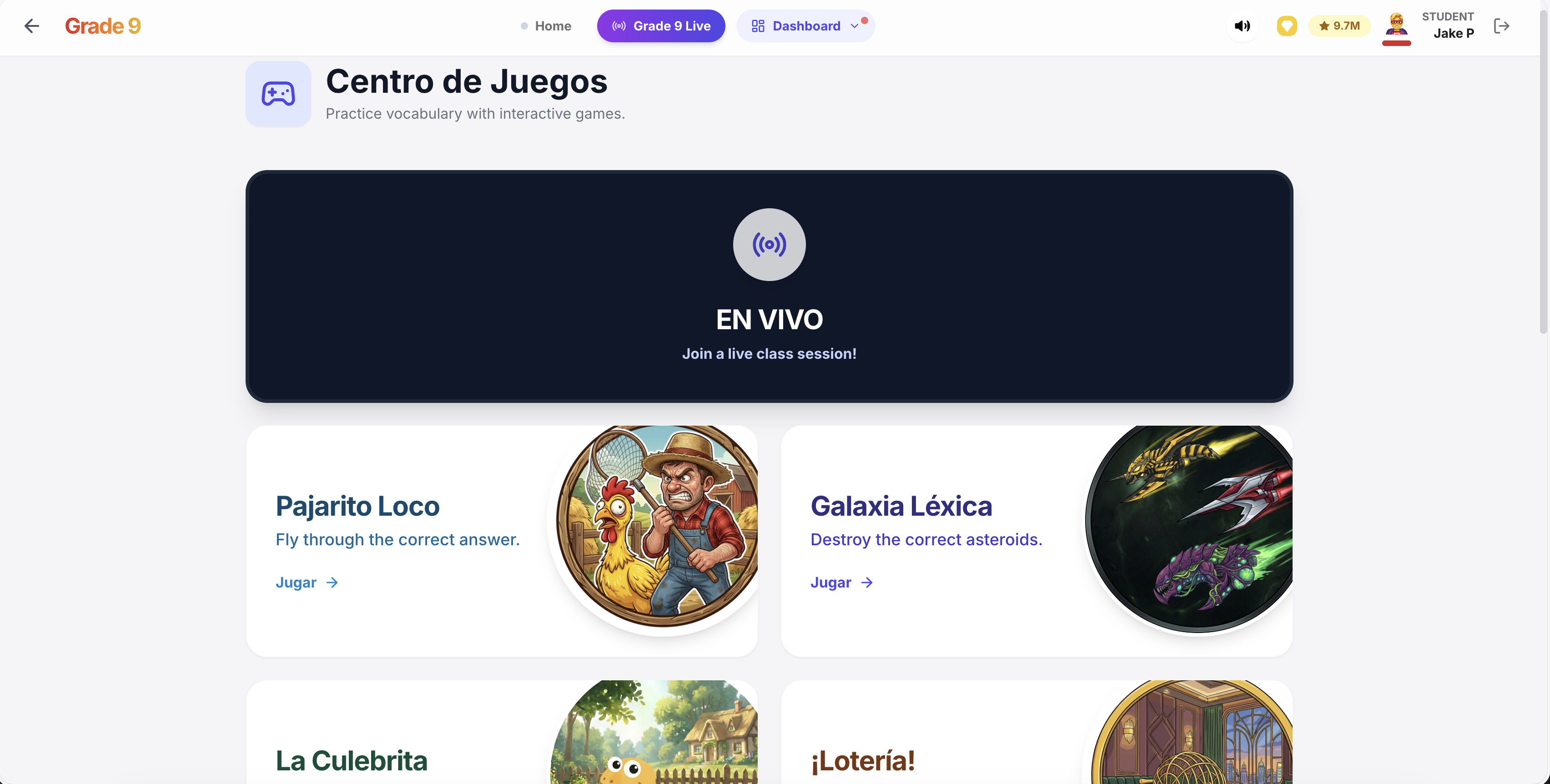
Assignments & tracking
Set work for a whole class or selected students, schedule it and see who has started or finished.
Explore this guide →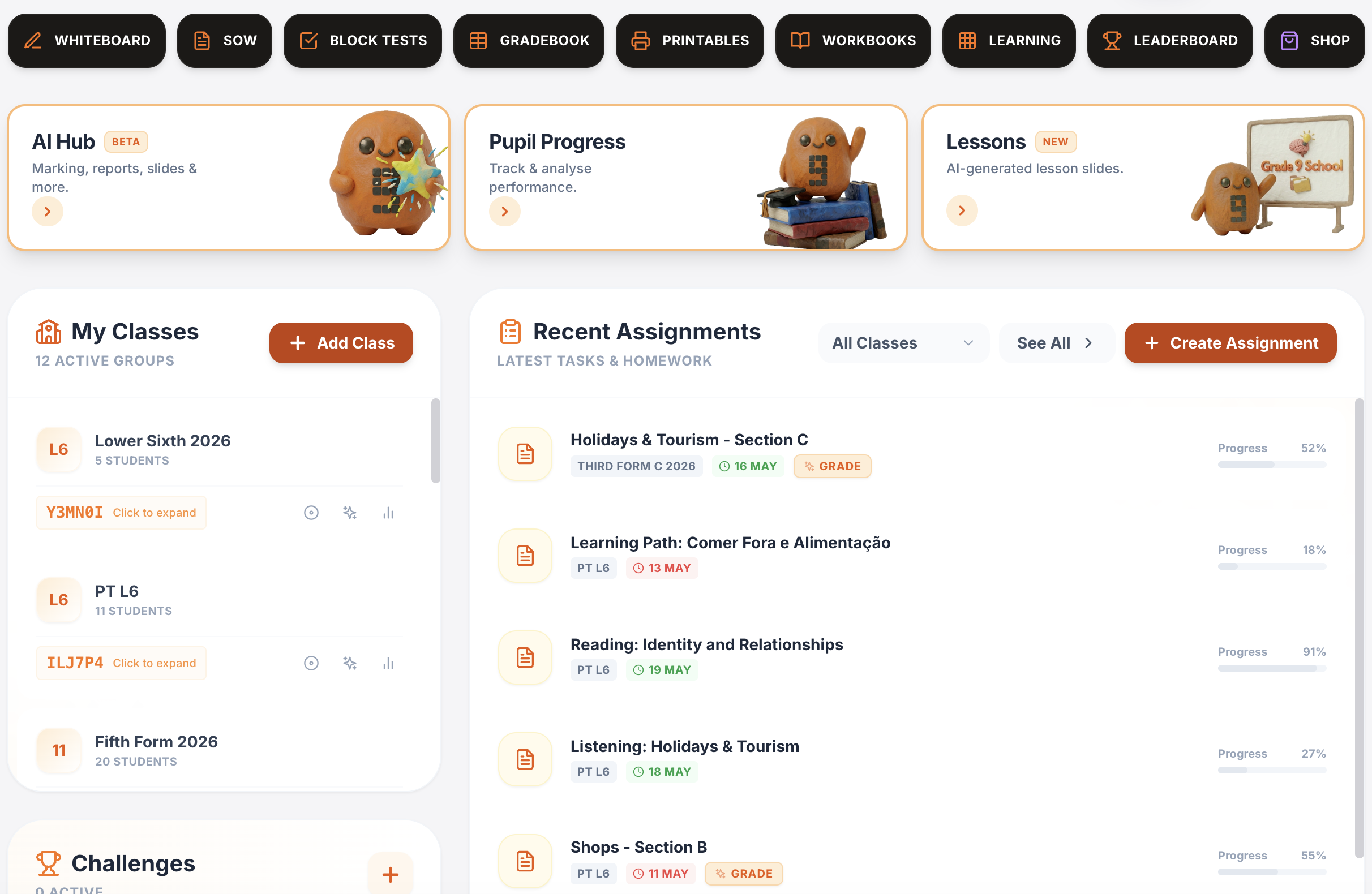
Vocabulary, grammar, translation & independent practice
Structured learning paths, flashcards, vocabulary builders, grammar, verb work, translation and tracked independent learning across supported languages.
Explore this guide →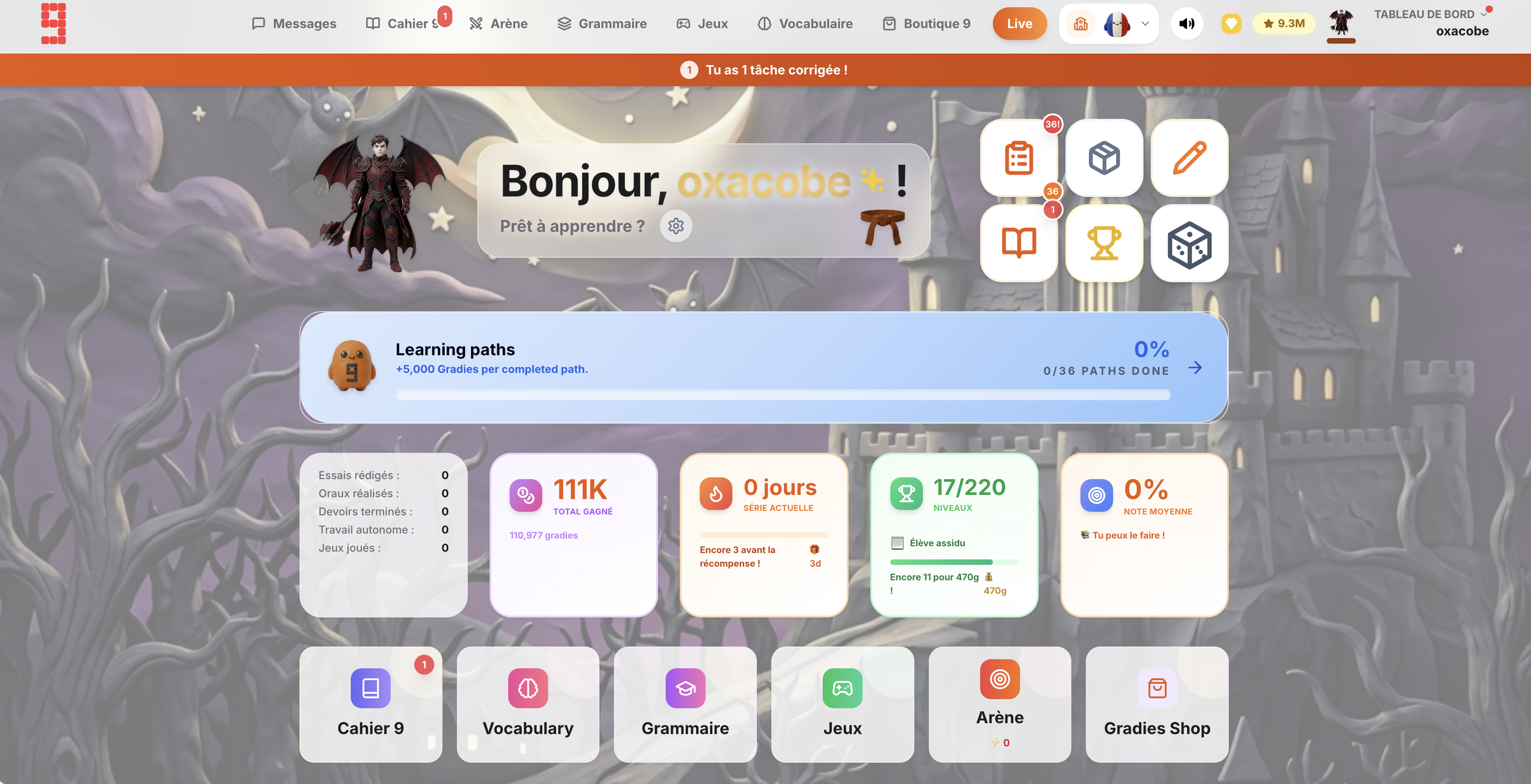
Spanish · French · German · Portuguese · Italian
Use the same platform architecture across the languages your department teaches, while keeping each class in its own language and curriculum context.
Explore language workflows →
From planning to progress, it all connects.
Curriculum management, assignments, AI feedback, printables, gradebook and lesson planning all sit inside the same Grade 9 environment.
Find the detail you need.
Open any section for the key facts, practical detail, examples and sources.
01Write the outcome as performance⌄
Weak:
Students will learn food vocabulary.
Stronger:
Students can ask and answer what they like to eat and give one reason.
Weak:
Students will understand the past tense.
Stronger:
Students can say what they did last weekend in a short sequence.
Weak:
Students will practice listening.
Stronger:
Students can identify the main plan and two supporting details in a short conversation about weekend activities.
A performance outcome helps you decide what belongs in the lesson.
02Pick the final evidence before the activities⌄
If the final task is a short partner conversation, students need enough language to ask, answer and react.
If the final task is a short written message, students need models, useful vocabulary and the structures required to communicate the message.
If the final task is interpretive, students need strategies for extracting meaning from the kind of input they will encounter.
Plan the final task first.
Then ask:
What would students need in order to succeed at this task?
That list becomes the scaffolding.
03A practical planning sequence⌄
1. Define the communicative outcome
Keep it narrow enough for one lesson.
2. Decide what evidence will show success
Examples:
- a 45-second partner exchange;
- a four-sentence message;
- a completed listening task with a short response;
- a picture comparison;
- a recommendation with one reason.
3. Identify the language students need
Choose:
- essential vocabulary;
- one or two useful structures;
- key chunks;
- question forms;
- discourse language if needed.
Do not add language merely because it belongs to the same textbook page.
4. Plan the input
Students need to see or hear the target language doing the job before they are expected to do it.
Input might be:
- a short model dialogue;
- a teacher mini-story;
- a listening clip;
- an image sequence;
- a short reading;
- a worked example.
5. Build practice toward the final task
Move from more supported to less supported work.
For example:
recognize → retrieve → combine → interact → perform
or:
gist listening → detail listening → notice phrase → use phrase in response
6. Plan the transition, not only the activities
Teachers often lose time between good tasks.
Ask:
- What will be on the screen when students enter?
- What material do they need?
- How will partners change?
- How will answers be checked?
- What happens if students finish early?
- What exactly signals the start of the final task?
Smooth transitions protect learning time.
7. End with evidence you can use
The final task should tell you something.
You should be able to decide:
- ready to move on;
- needs another supported attempt;
- class-wide misconception;
- small group needs reteaching;
- one structure needs more retrieval.
An exit ticket that cannot change your next decision is mostly paperwork.
04A 45-minute example: Spanish 1, making plans⌄
Outcome:
Students can suggest one activity, accept or reject a suggestion, and agree on a plan.
0–5:
Fast retrieval of six activity phrases from the previous lesson.
5–10:
Teacher models a short conversation. Students identify the three moves: suggest, react, agree.
10–17:
Listening task: which plan do two students finally choose and why?
17–24:
Guided substitution practice using the model structure.
24–31:
Partner Round 1 with visible support.
31–36:
Quick whole-class correction of two common issues.
36–42:
Partner Round 2 with a new constraint and less support.
42–45:
Students record or write the final plan and one useful phrase they can now use without notes.
Every activity earns its place because it prepares the final conversation.
05Use Can-Do statements as a planning tool, not wall decoration⌄
The 2026 NCSSFL-ACTFL Can-Do Statements organize communication around Interpretive, Interpersonal and Presentational modes.
A useful classroom Can-Do should help the teacher and student understand the performance target.
If it is so broad that it could describe six weeks of learning, narrow it for the lesson.
If it describes content coverage rather than communication, rewrite it.
“Students can understand clothing vocabulary” is vague.
“I can identify what someone is wearing in a short description” gives a clearer performance.
06Plan language in context⌄
Grammar matters.
The question is where it enters the lesson.
ACTFL’s guiding principles frame grammar as one element of language proficiency within meaningful communicative contexts.
So instead of:
Today: direct-object pronouns.
Try:
Today students need to say what they bought and whether they liked it. Direct-object pronouns become one tool for doing that efficiently.
The grammar is still taught. It has a communicative reason.
07Make differentiation change access, not the destination⌄
Useful differentiation can include:
- a smaller phrase bank;
- sentence starters;
- an audio replay;
- an annotated model;
- reduced visual clutter;
- challenge prompts;
- optional extension functions.
Avoid giving some students a completely unrelated “easier worksheet” that no longer prepares them for the same communicative goal.
08When a lesson goes wrong, diagnose the sequence⌄
If students fail the final task, ask where the chain broke.
Did they:
- never understand the model?
- lack essential vocabulary?
- know the words but fail to retrieve them?
- understand the grammar but not use it under pressure?
- have too little speaking rehearsal?
- misunderstand the final task?
The answer tells you what to change next time.
09How Grade 9 School can support lesson planning⌄
The Grade 9 Presentation Generator is built around a final-task-first sequence when a teacher selects a generated final task. The service creates the final task and then uses it to shape the earlier scaffolding rather than assembling unrelated activities.
Teachers choose the learning context, selected activity types, optional grammar focus and final task. The generated structure is then checked for required slide order and activity counts before it is saved.
That structural validation does not prove the language or pedagogy is perfect. The teacher still needs to review the lesson, edit awkward examples and decide whether the sequence fits the class.
The current player can also support answer reveals, timers, custom slides, selected Whiteboard launches and other classroom tools. A saved lesson can be edited or reused rather than regenerated simply because another class needs it.
10A one-page lesson-planning checklist⌄
Before teaching, can you answer:
- What will students be able to do by the end?
- What evidence will show it?
- What language is essential?
- What input shows the language doing the job?
- What practice moves students toward the final task?
- Where does support fade?
- What will I look for during the final task?
- What will I do next if students are not ready?
If those answers are clear, the lesson is probably coherent.