 School





World Language Writing Feedback That Leads to Better Writing
Give clearer world language writing feedback without correcting every line. Focus on learning goals, useful targets, revision and teacher judgment.
Grade 9 School brings curriculum, lesson planning, practice, homework, feedback, live activities, printables and progress tracking into one connected teaching workflow.
 Spanish
 French
 German
 Portuguese
 Italian
Practice, feedback and progress in one place.

In a world language class, feedback earns its place when it helps a student communicate a message more successfully the next time they write.
That means the target is not simply fewer visible errors. It is stronger task fulfillment, better control of useful language and a clear next step the student can act on.
ACTFL’s guidance on effective feedback emphasizes feedback that is specific, timely, relevant to learning goals and manageable enough not to overwhelm learners. That is a useful test for any feedback system, human or AI-assisted. [S1]
Explore the topic ↓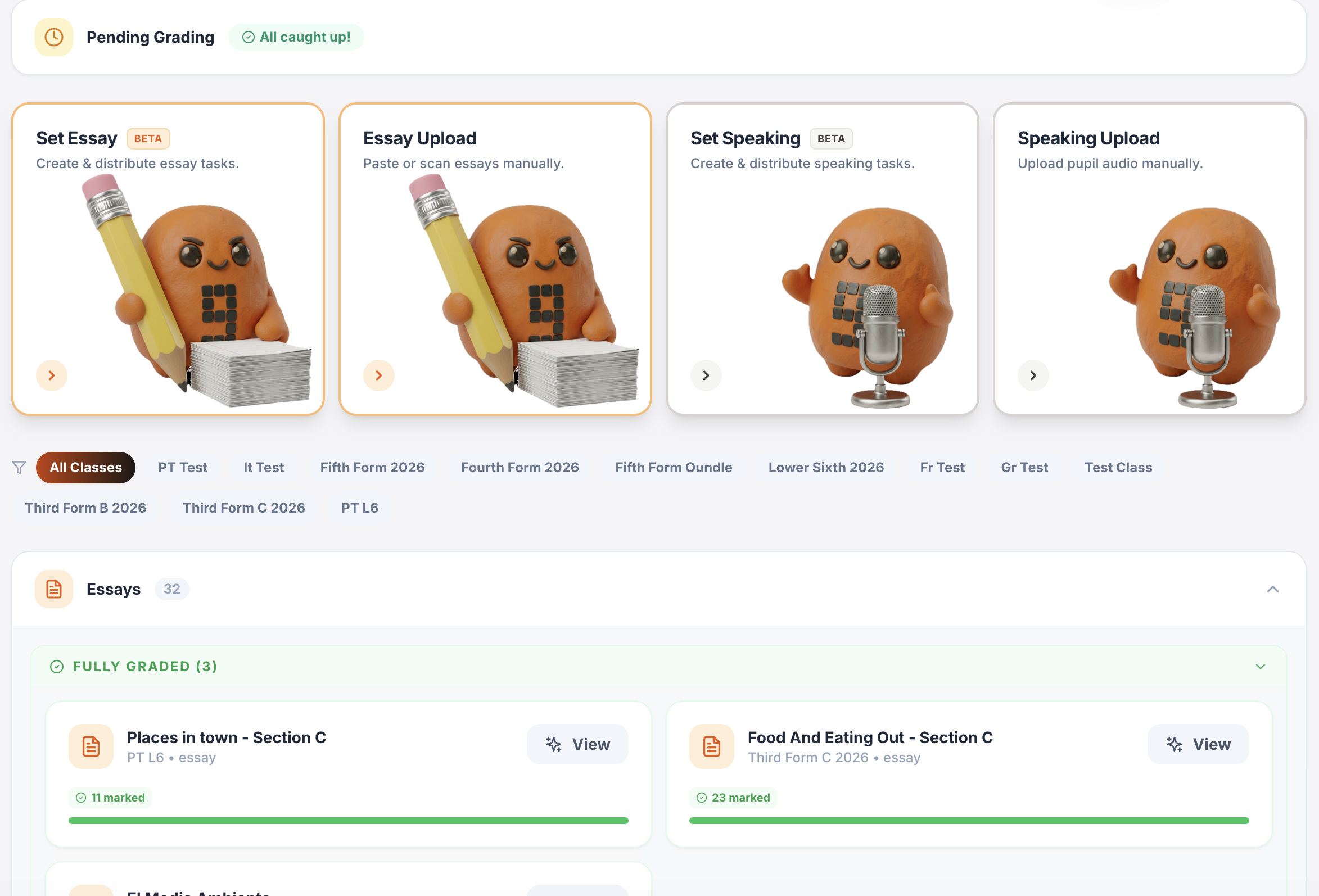
One platform for teaching, practice, feedback and progress.
Plan lessons, set homework, run live activities, generate printables, give AI-supported grading and track progress across Spanish, French, German, Portuguese and Italian.
Writing & speaking grading
Set writing and speaking tasks, collect submissions, generate detailed feedback and keep teacher review in the loop.
Explore this guide →Gradebook & reports
Track scores, completion, engagement and learning evidence across classes.
Explore this guide →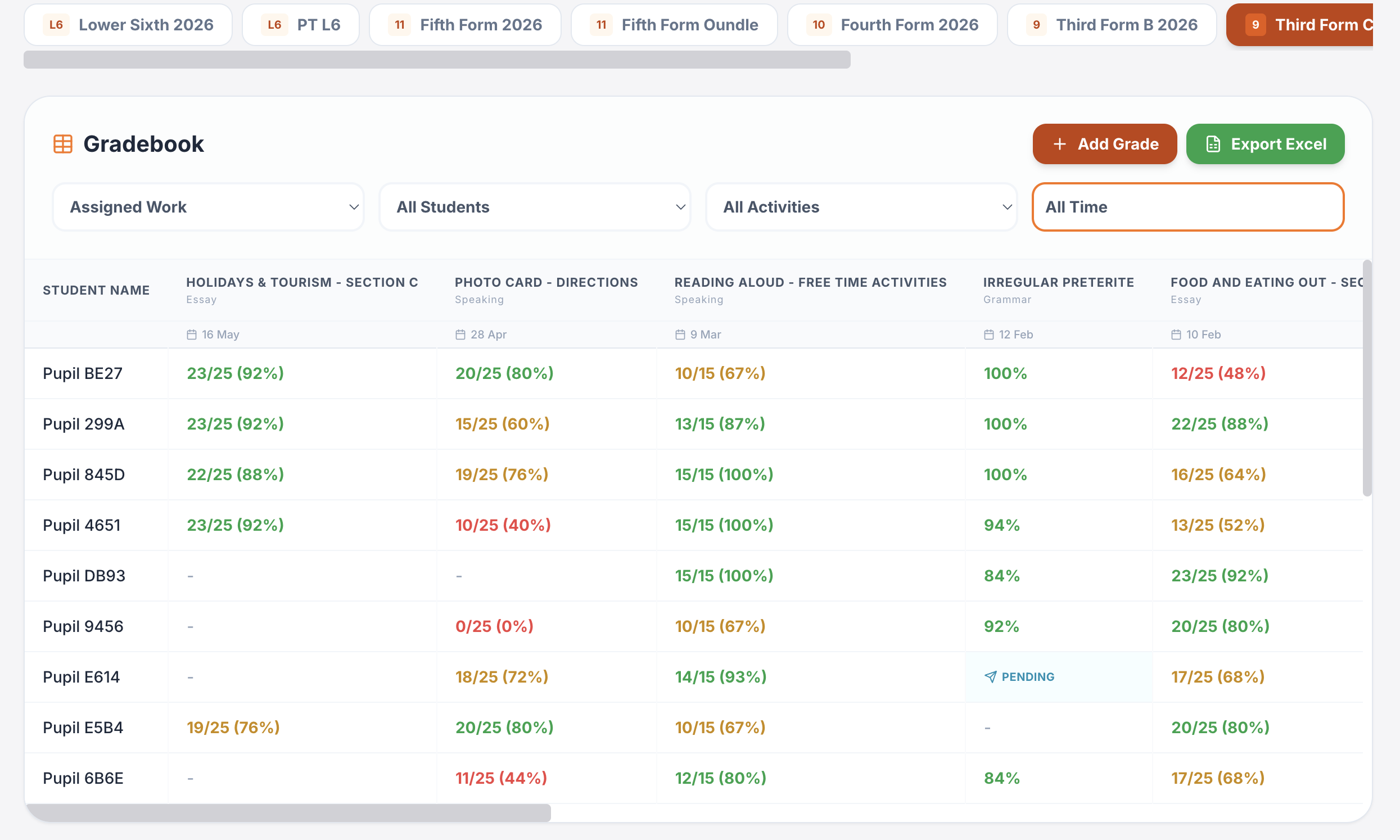
Interactive lessons
Generate, edit, save and reuse complete lesson presentations.
Explore this guide →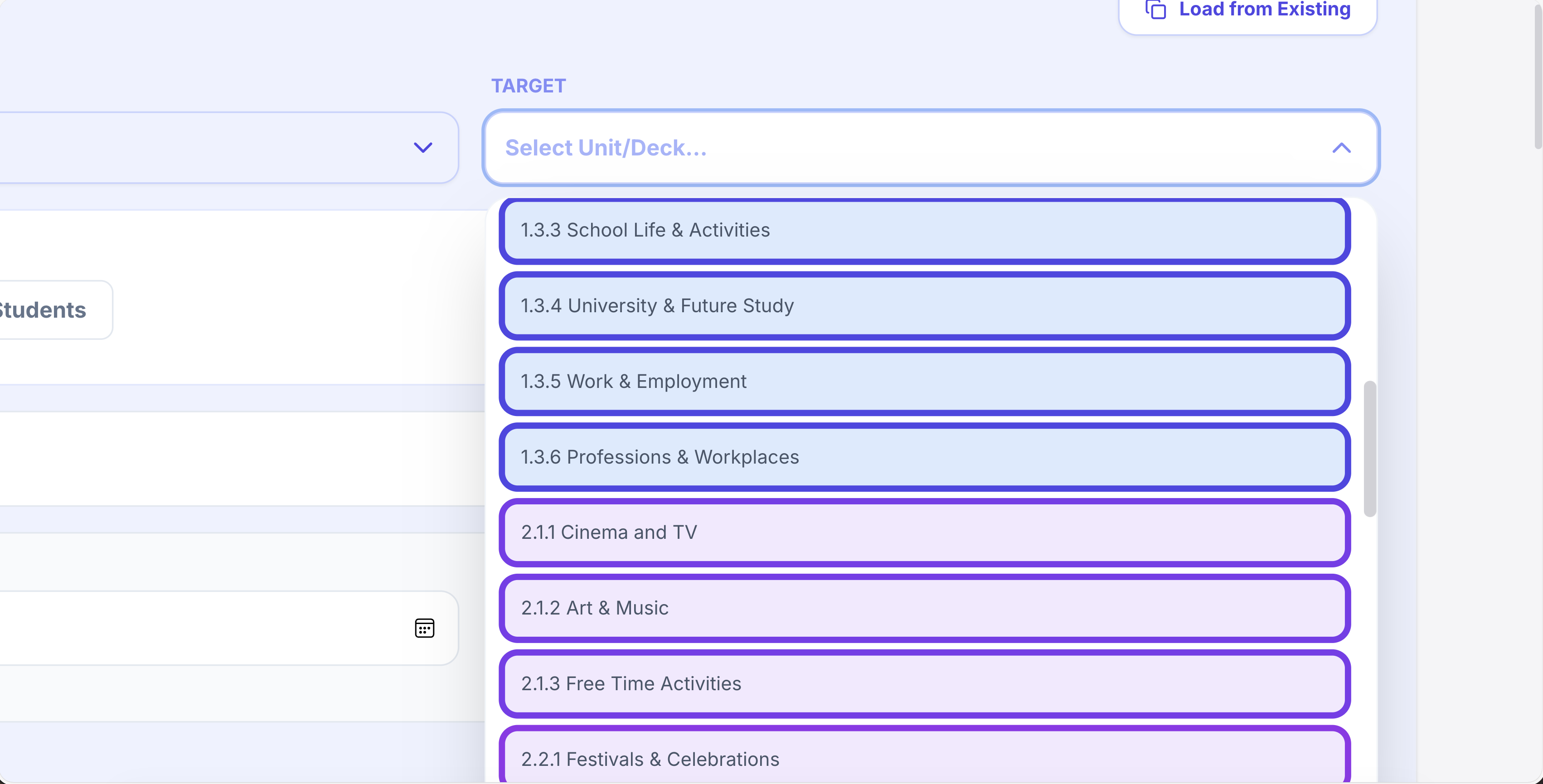
Printables in seconds
Vocabulary, grammar, translation, reading, listening, worksheets and booklets.
Explore this guide →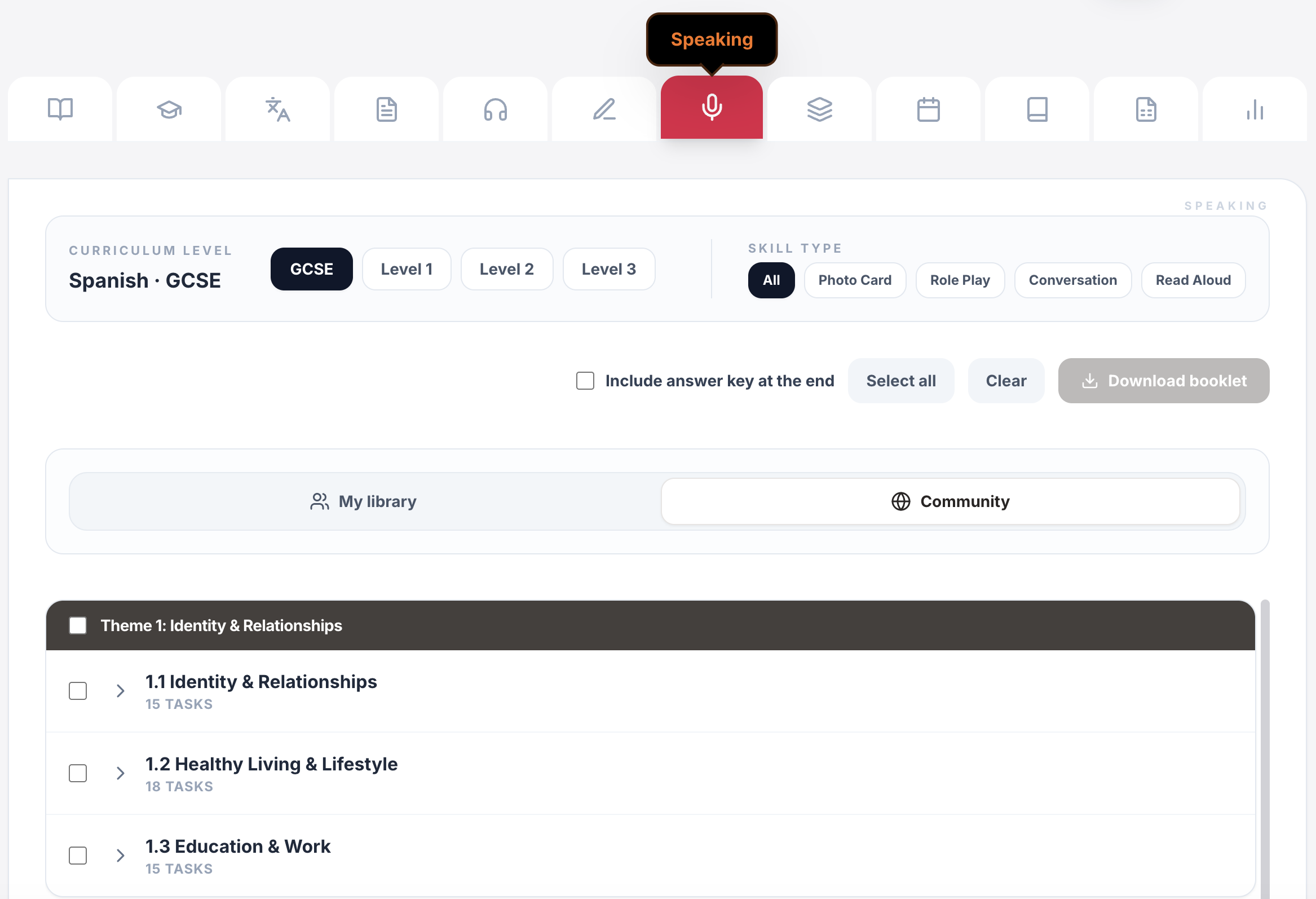
Live games & whiteboards
Turn curriculum content into whole-class competition, retrieval and live response.
Explore this guide →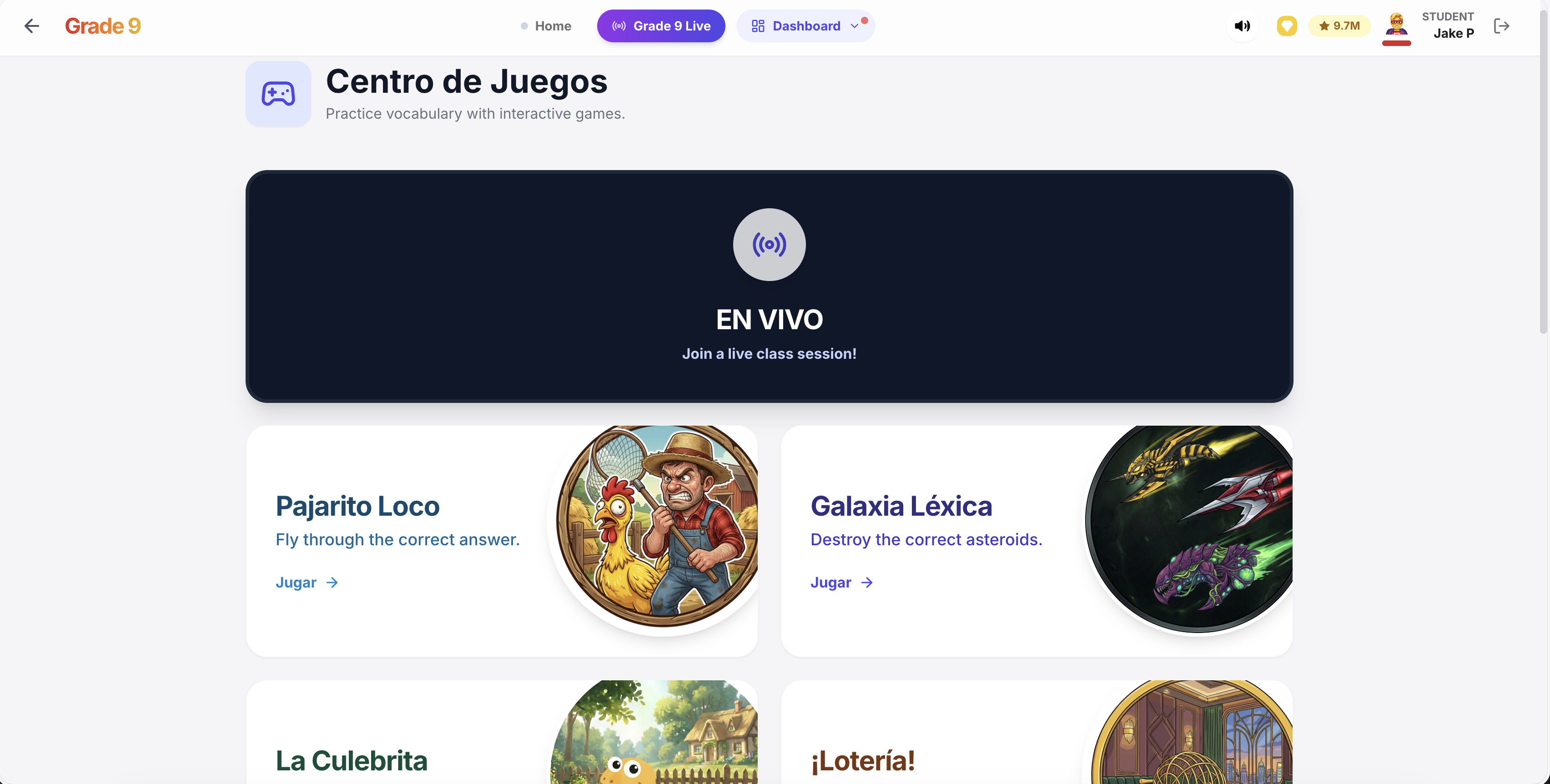
Assignments & tracking
Set work for a whole class or selected students, schedule it and see who has started or finished.
Explore this guide →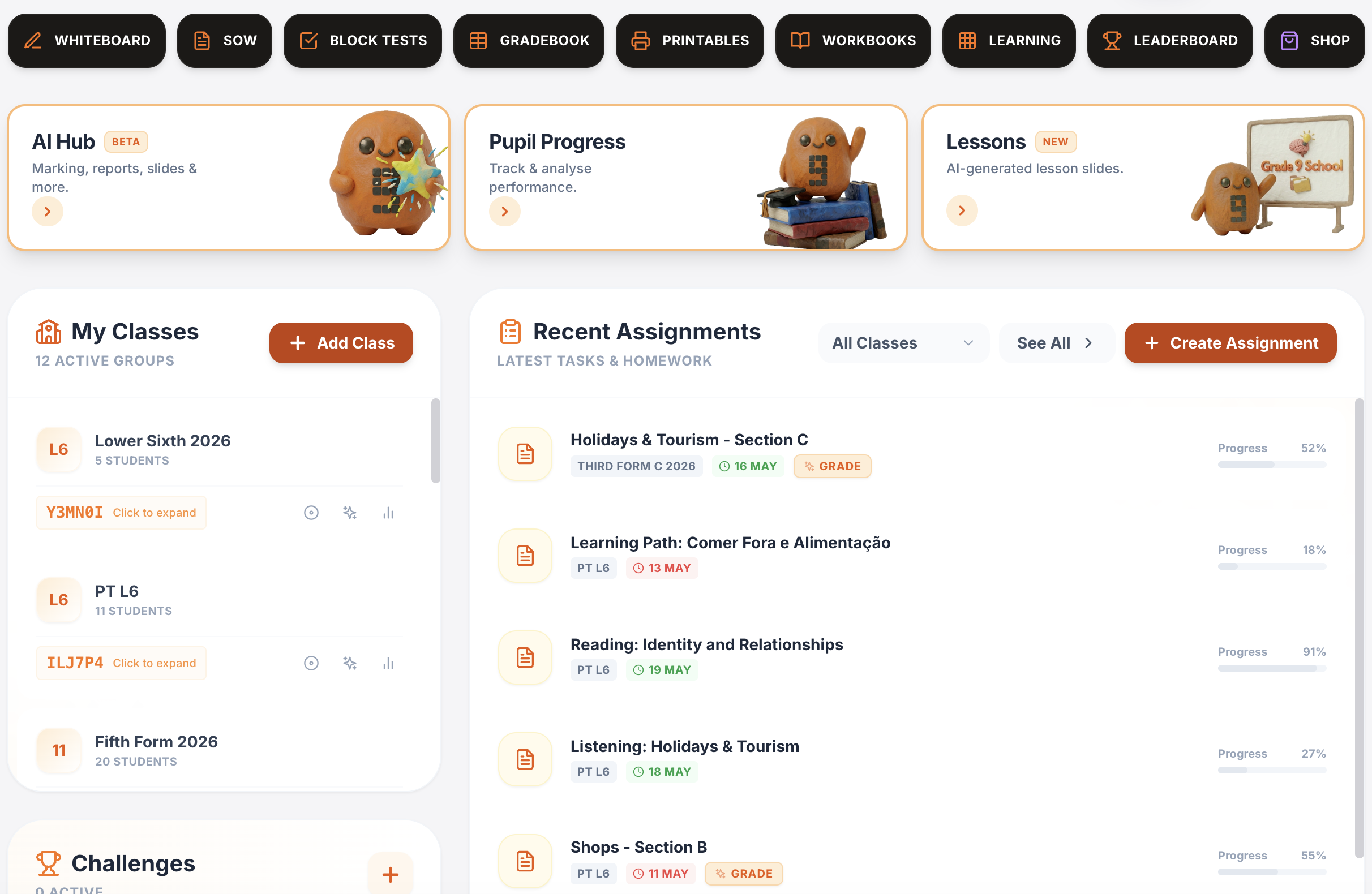
Vocabulary, grammar, translation & independent practice
Structured learning paths, flashcards, vocabulary builders, grammar, verb work, translation and tracked independent learning across supported languages.
Explore this guide →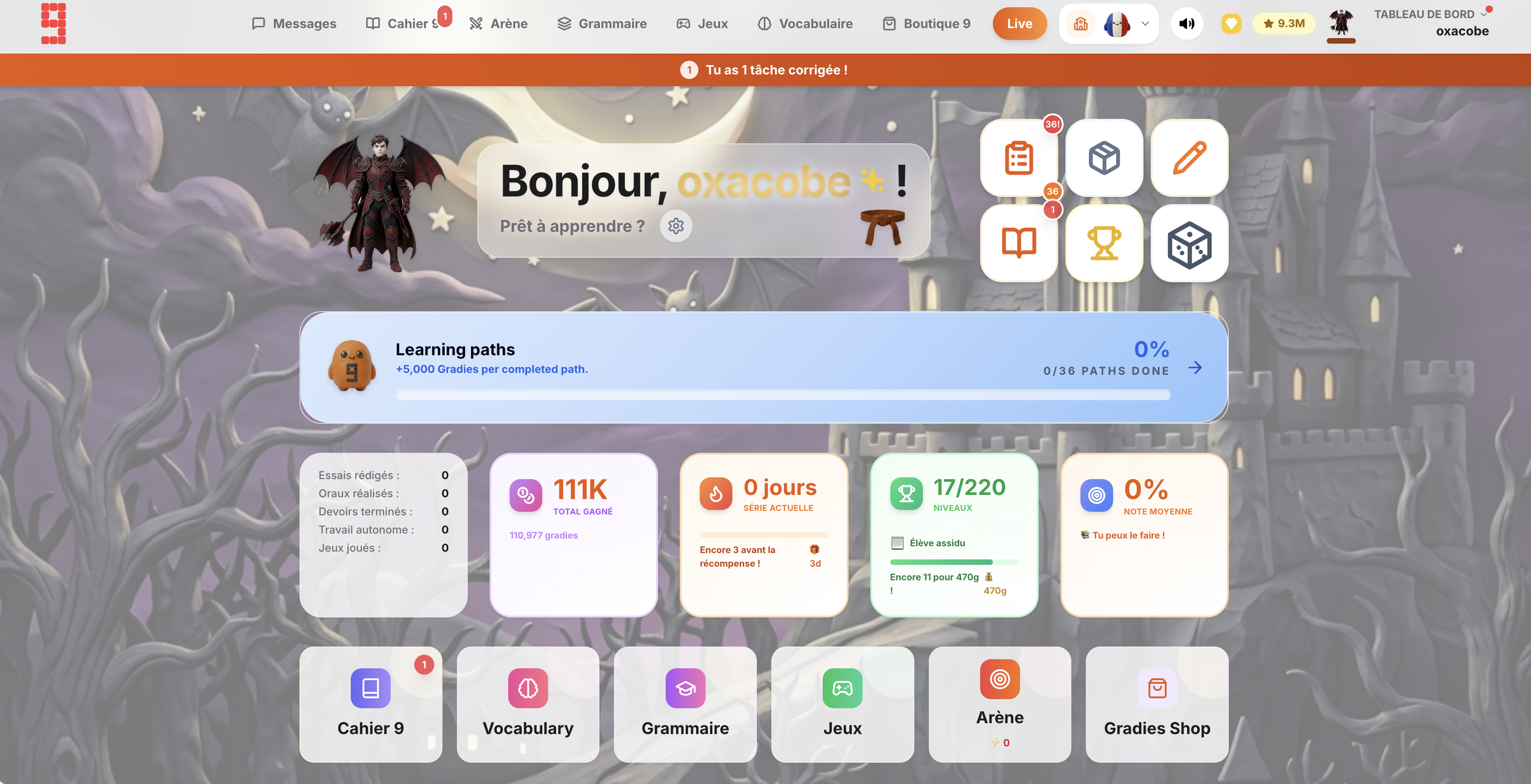
Spanish · French · German · Portuguese · Italian
Use the same platform architecture across the languages your department teaches, while keeping each class in its own language and curriculum context.
Explore language workflows →
From planning to progress, it all connects.
Curriculum management, assignments, AI feedback, printables, gradebook and lesson planning all sit inside the same Grade 9 environment.
Find the detail you need.
Open any section for the key facts, practical detail, examples and sources.
01Start with the communicative job⌄
Before correcting language, ask:
What was the student actually trying to accomplish?
For example:
- describe a routine;
- narrate what happened;
- compare two choices;
- recommend an option;
- explain and support an opinion;
- write a message for a particular audience.
A grammatically imperfect response may still accomplish the communicative purpose well. A highly accurate response may avoid the task.
Feedback should reflect both.
02Separate three kinds of feedback⌄
1. Task fulfillment
Did the student communicate the required content?
Examples:
- You explain both reasons clearly.
- The final recommendation is missing.
- I understand what happened, but the sequence is hard to follow.
2. Language control
What recurring language issue is getting in the way?
Examples:
- Past-time verb forms are inconsistent.
- Adjective agreement breaks down when the noun changes gender or number.
- Word order is understandable but too dependent on English patterns.
3. Growth target
What should the student do next?
A useful target is actionable:
Rewrite the final four sentences so the narration stays in the past.
A weak target is:
Check grammar.
03Do not correct every error just because you can see it⌄
If a student makes many different mistakes, returning every correction can hide the pattern.
Prioritize errors that are:
- frequent;
- important to meaning;
- linked to the current learning goal;
- developmentally useful;
- likely to recur.
You can still note that other errors exist. The growth target should tell the student where to put effort first.
04Show the student what success looks like⌄
Feedback becomes more usable when it includes a model of the change.
Instead of:
Verb wrong.
Try:
You are narrating yesterday, so keep this event in the past: fui, vi, compré. Rewrite the next two verbs to match that time frame.
Instead of:
Needs more detail.
Try:
Add one reason after your opinion using porque, ya que or another connector you know.
The second version tells the student what to do.
05Make revision part of the assignment⌄
The learning happens when the student uses the feedback.
A simple revision loop is:
- Read the feedback.
- Restate the main target in your own words.
- Correct two selected examples.
- Rewrite one short section.
- Compare the original and revised version.
- Explain one thing you changed.
This is more useful than copying an entirely corrected response.
06A classroom example: Spanish 2 club recommendation⌄
Task:
Write a short recommendation about whether a friend should join a school club.
Student strengths:
The opinion is clear and the student gives two reasons.
Main issue:
The student repeatedly uses infinitives where a conjugated verb is needed.
Feedback:
Your recommendation is clear and your reasons make sense. The biggest language issue is that several actions are left in the infinitive. Correct the three highlighted verbs so each has a subject and tense. Then rewrite the final two sentences with one connector between the ideas.
Revision:
The student corrects the three verbs, rewrites the ending and highlights the connector they added.
The teacher can now see whether the feedback produced a change.
07Choose the amount of support the error needs⌄
You might:
- underline an error but not correct it when the student can probably self-repair;
- add a short code when the error type is familiar;
- give the corrected form when the student is unlikely to know it yet;
- model a stronger sentence when organization or range is the issue;
- ask a question when meaning is unclear.
The method matters less than whether the student can understand and act on it.
08Keep feedback connected to proficiency-oriented growth⌄
ACTFL Performance Descriptors describe classroom performance through functions, context and content, text type, language control and other domains. [S2]
That helps prevent writing feedback from collapsing into an error count.
A student may need to improve accuracy, but also to connect ideas, sustain a time frame, adapt language to an audience or accomplish a more demanding communicative function.
09AI-assisted writing feedback: teacher-approved draft, not verdict⌄
AI can help identify patterns or draft comments, but it can misread the task, invent an error, change a student’s intended meaning, overvalue complexity or produce too much feedback.
The boundary is simple:
AI may propose. The teacher checks, edits or rejects. The teacher decides what reaches the student.
For the wider governance questions around data, decision rights, local policy and what should never be delegated, see Teacher-controlled AI for world languages.
10How Grade 9 School handles writing feedback⌄
In the documented Grade 9 workflow, student writing moves from Draft to Submitted before it is ready for teacher marking.
Where the teacher chooses AI-supported feedback, Grade 9 creates a teacher-side draft. Generating that draft does not automatically publish it to the student.
The teacher can:
- review the submitted writing and task context;
- inspect the proposed feedback;
- change the proposed mark or feedback;
- save an edited draft without sending it;
- regenerate when a genuinely new analysis is useful;
- select Approve & Send only when the final feedback is acceptable.
Published feedback is therefore the teacher-approved version.
Where the separate Feedback Action feature is enabled, a teacher can also turn feedback into a structured improvement sequence. Because that feature is gated, it should not be assumed to exist in every account or deployment.
11Common writing-feedback mistakes⌄
Correcting the paper instead of teaching the writer
The finished correction may be accurate, but the student did none of the thinking.
Giving every student the same target
Common class patterns exist, but useful feedback still needs to match the actual evidence.
Sending AI feedback unread
Fast is not the same as defensible.
Letting feedback arrive too late to use
Feedback is most useful when students can still remember the task and apply the advice in a revision or near-term next piece.
12A short teacher review check for AI-assisted writing feedback⌄
Before publishing, ask:
- Is the correct task being reviewed?
- Does the feedback match what the student actually wrote?
- Are the language corrections accurate?
- Is the main target small enough to act on?
- Would I be comfortable explaining this feedback to the student?
If not, change it.