 School



German teaching platform for KS3 and GCSE
Teach German across KS3 and GCSE with connected lesson planning, vocabulary, grammar, translation, homework, speaking and writing feedback, live practice and progress tracking.
Grade 9 School brings curriculum, lesson planning, practice, homework, feedback, live activities, printables and progress tracking into one connected teaching workflow.
 Spanish
 French
 German
 Portuguese
 Italian
Practice, feedback and progress in one place.
German teaching needs more than a generic language shell. The class needs the correct German curriculum context, the input tools need to handle German accurately, and practice needs to connect vocabulary, grammar, translation, speaking and writing rather than treating them as separate systems.
Grade 9 School keeps those workflows inside the same German class and curriculum context.
Explore the topic ↓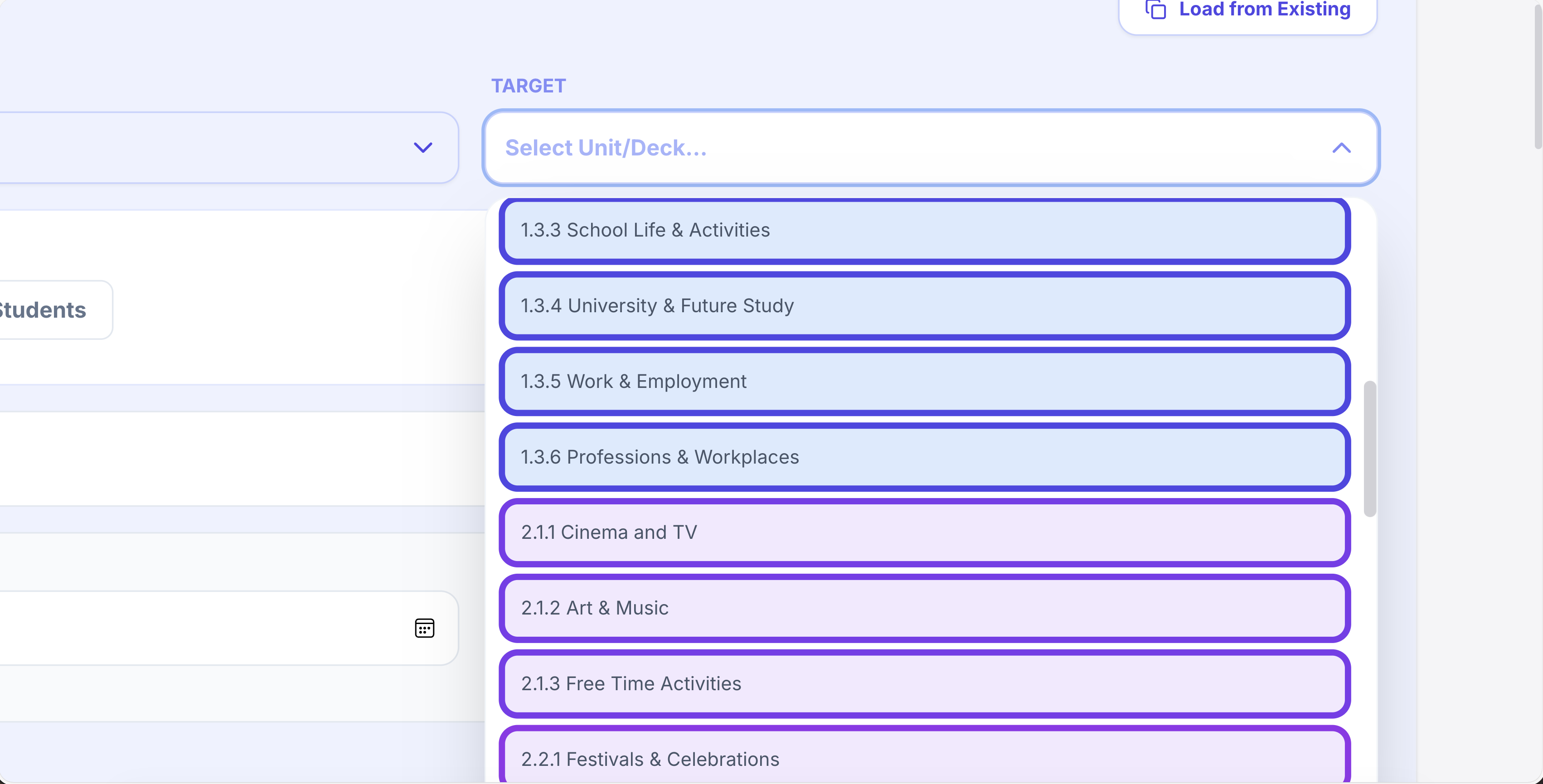
One platform for teaching, practice, feedback and progress.
Plan lessons, set homework, run live activities, generate printables, give AI-supported marking and track progress across Spanish, French, German, Portuguese and Italian.
Writing & speaking marking
Set writing and speaking tasks, collect submissions, generate detailed feedback and keep teacher review in the loop.
Explore this guide →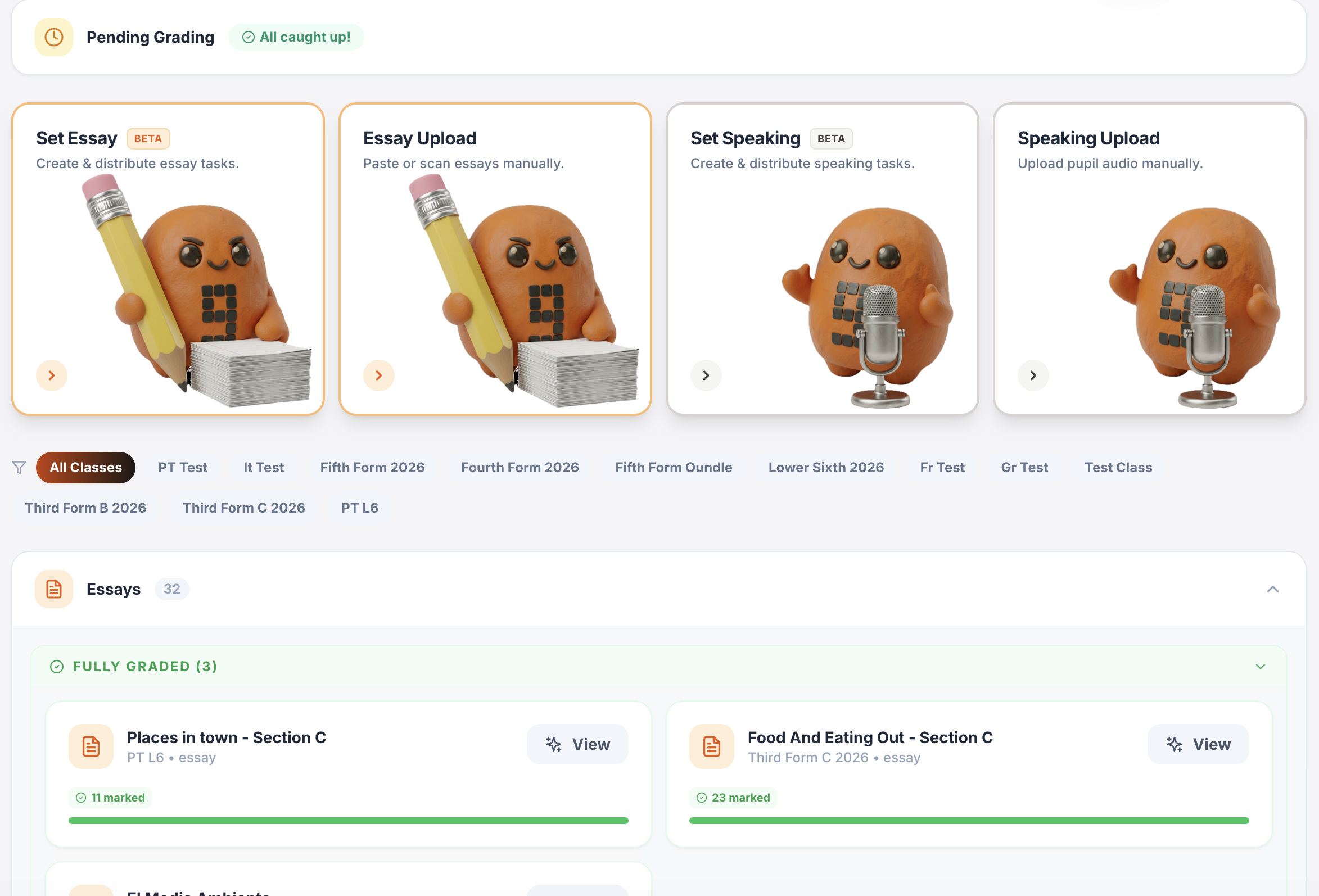
Gradebook & reports
Track scores, completion, engagement and learning evidence across classes.
Explore this guide →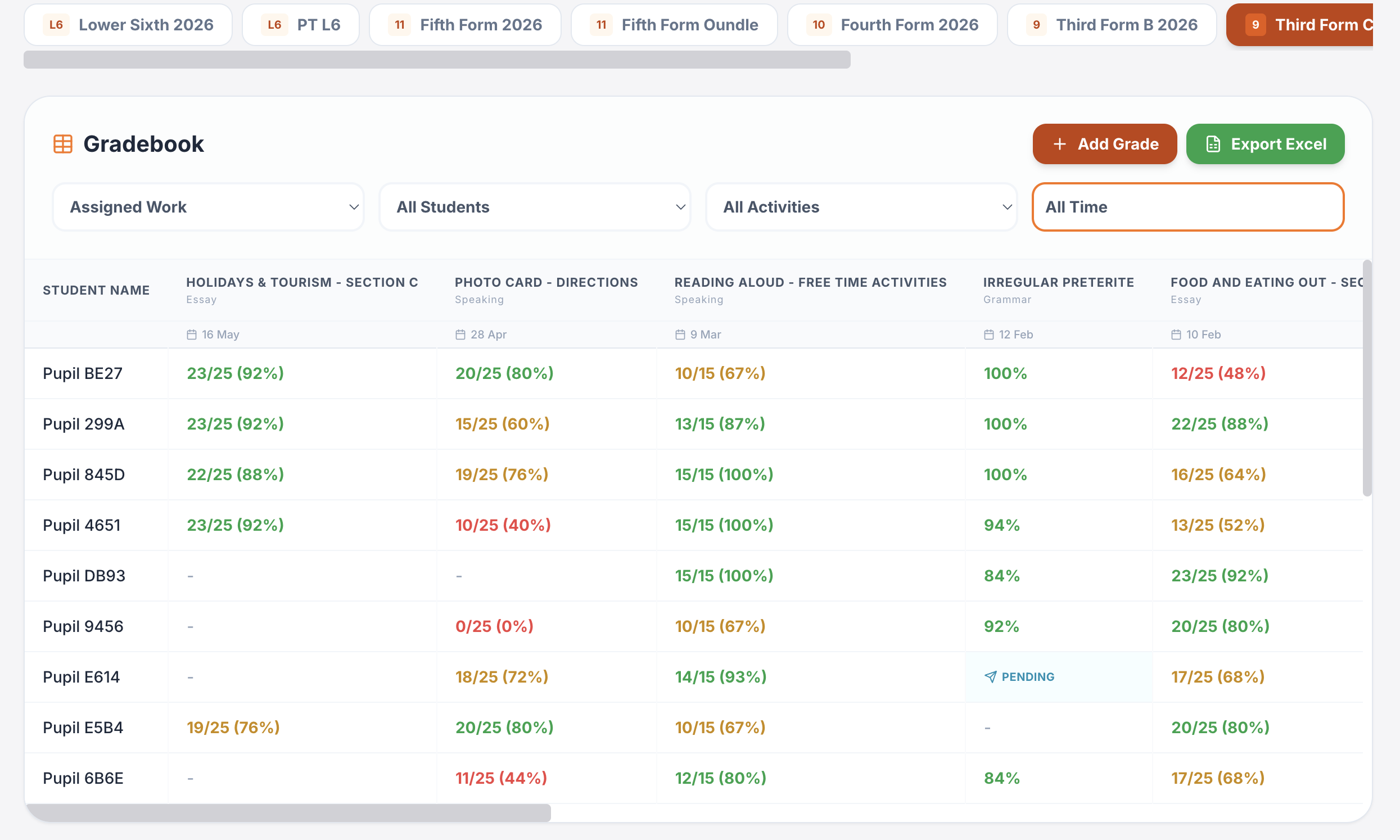
Interactive lessons
Generate, edit, save and reuse complete lesson presentations.
Explore this guide →Printables in seconds
Vocabulary, grammar, translation, reading, listening, worksheets and booklets.
Explore this guide →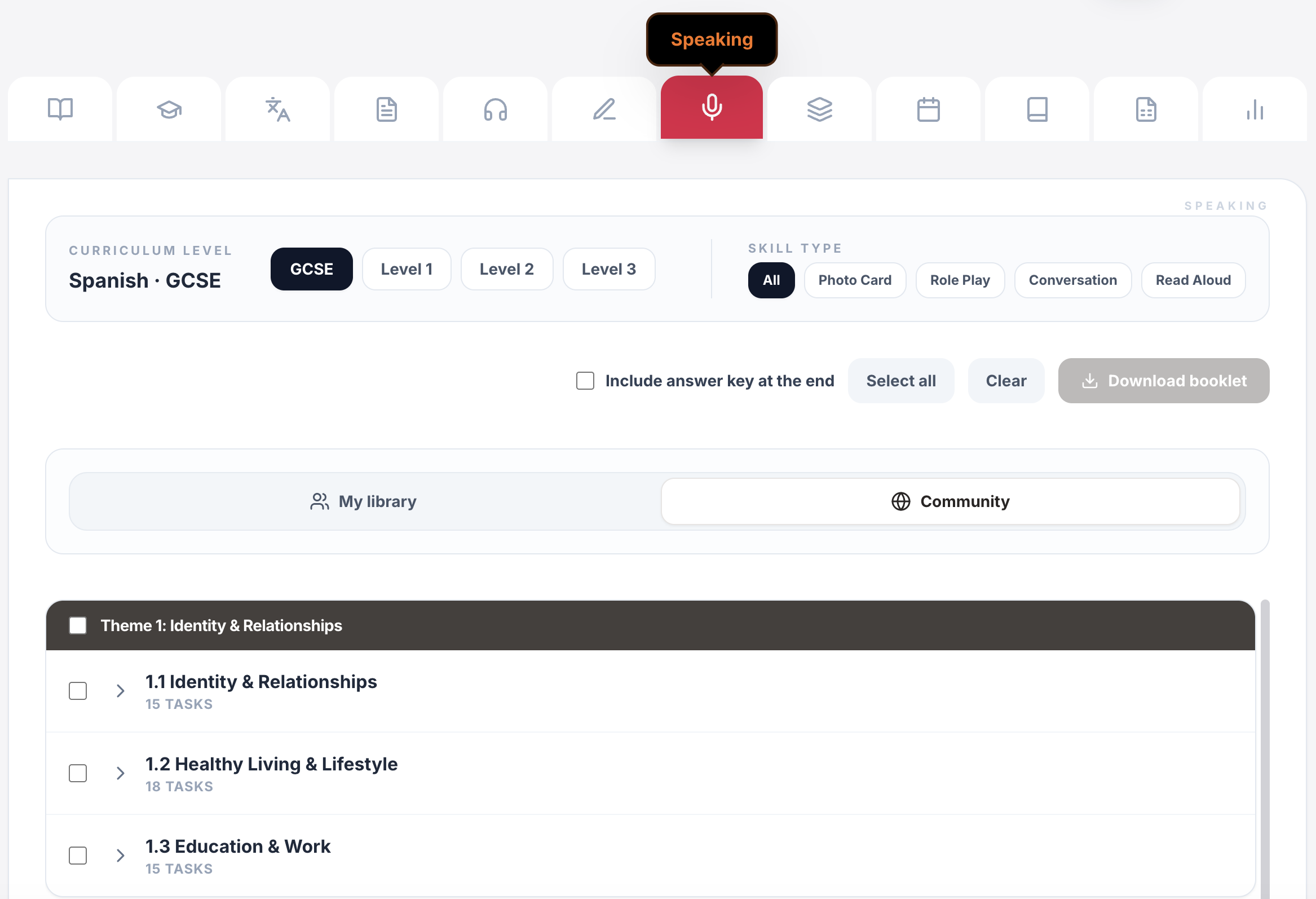
Live games & whiteboards
Turn curriculum content into whole-class competition, retrieval and live response.
Explore this guide →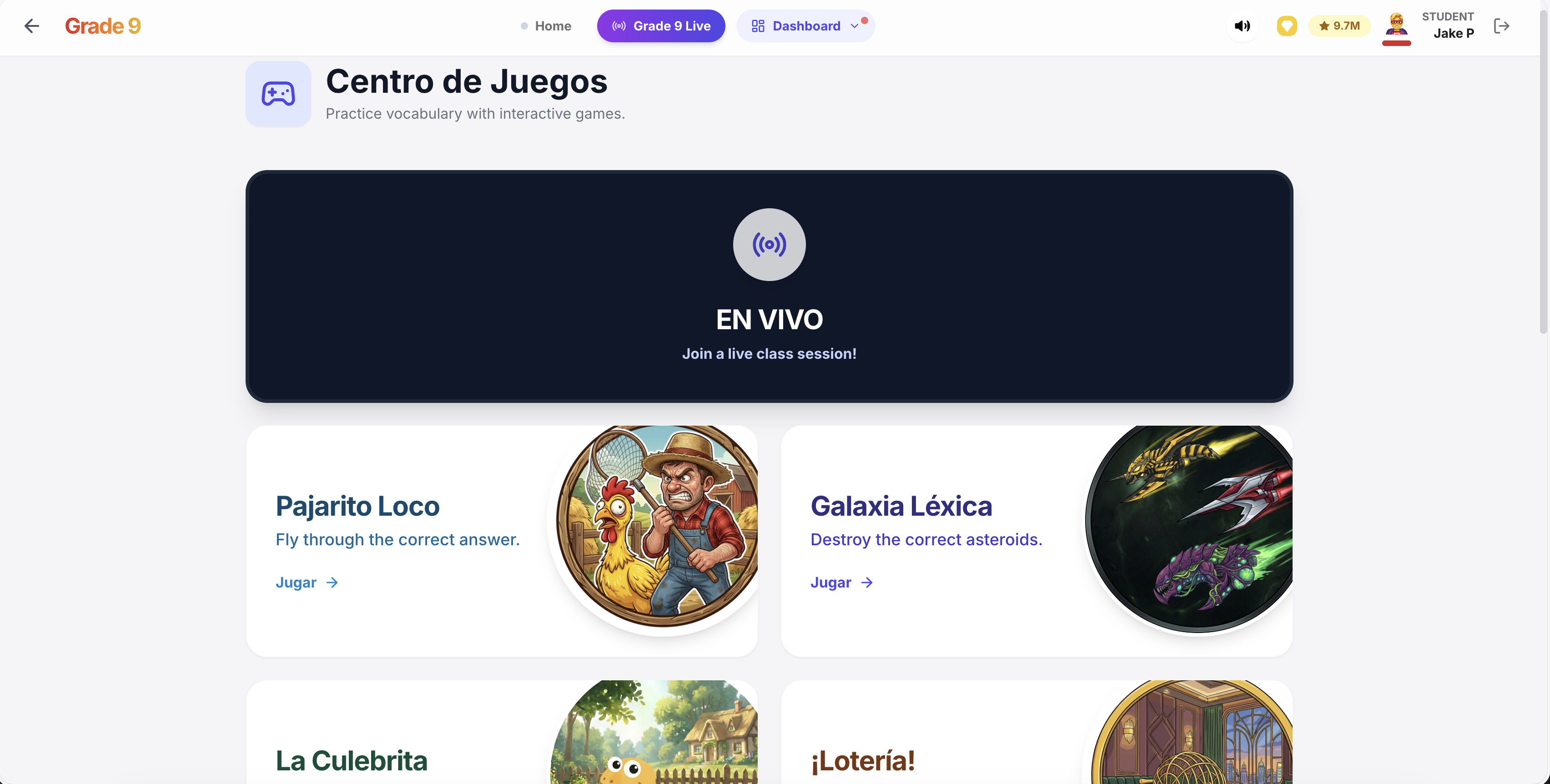
Assignments & tracking
Set work for a whole class or selected pupils, schedule it and see who has started or finished.
Explore this guide →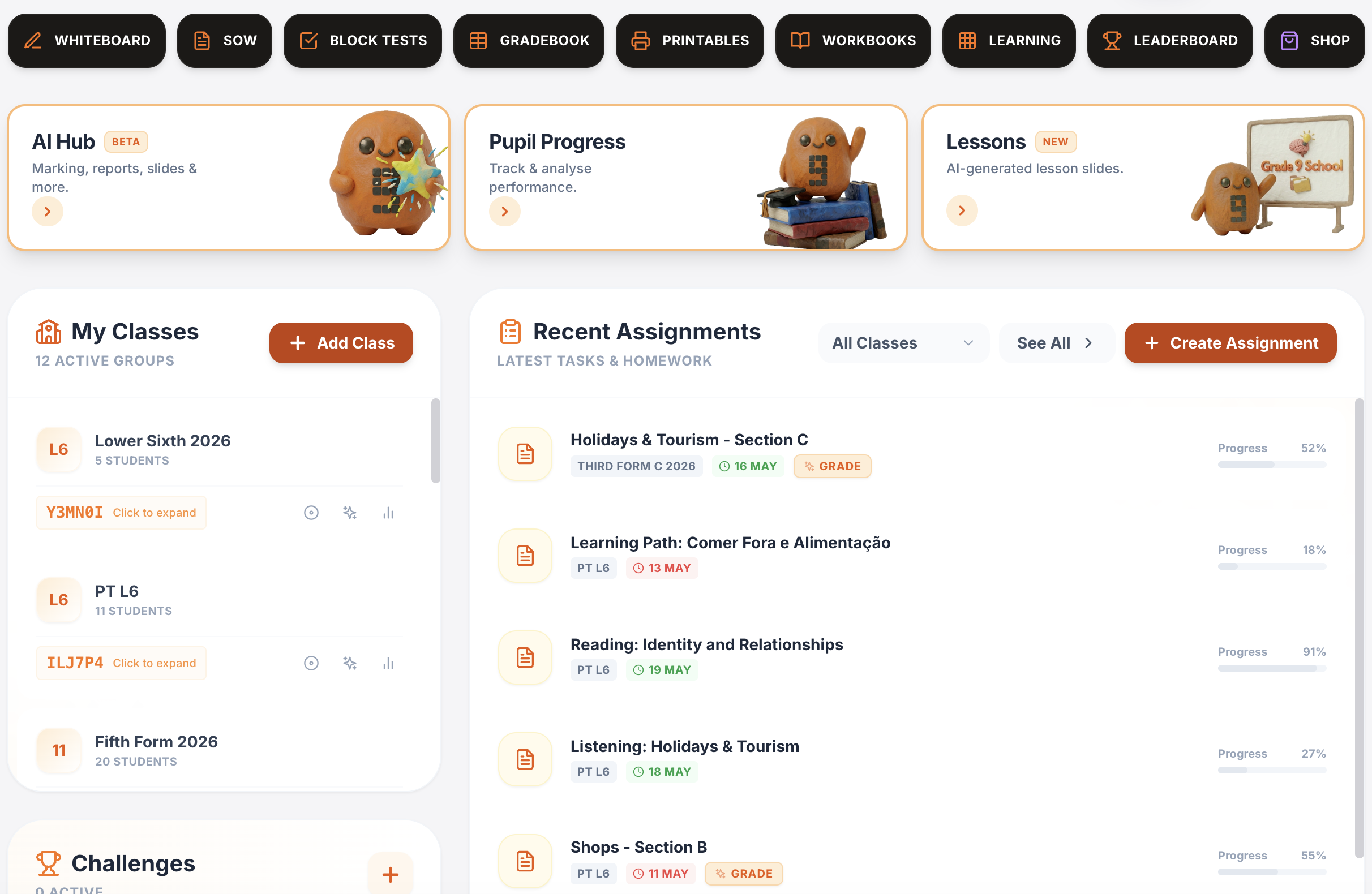
Vocabulary, grammar, translation & independent practice
Structured learning paths, flashcards, vocabulary builders, grammar, verb work, translation and tracked independent learning across supported languages.
Explore this guide →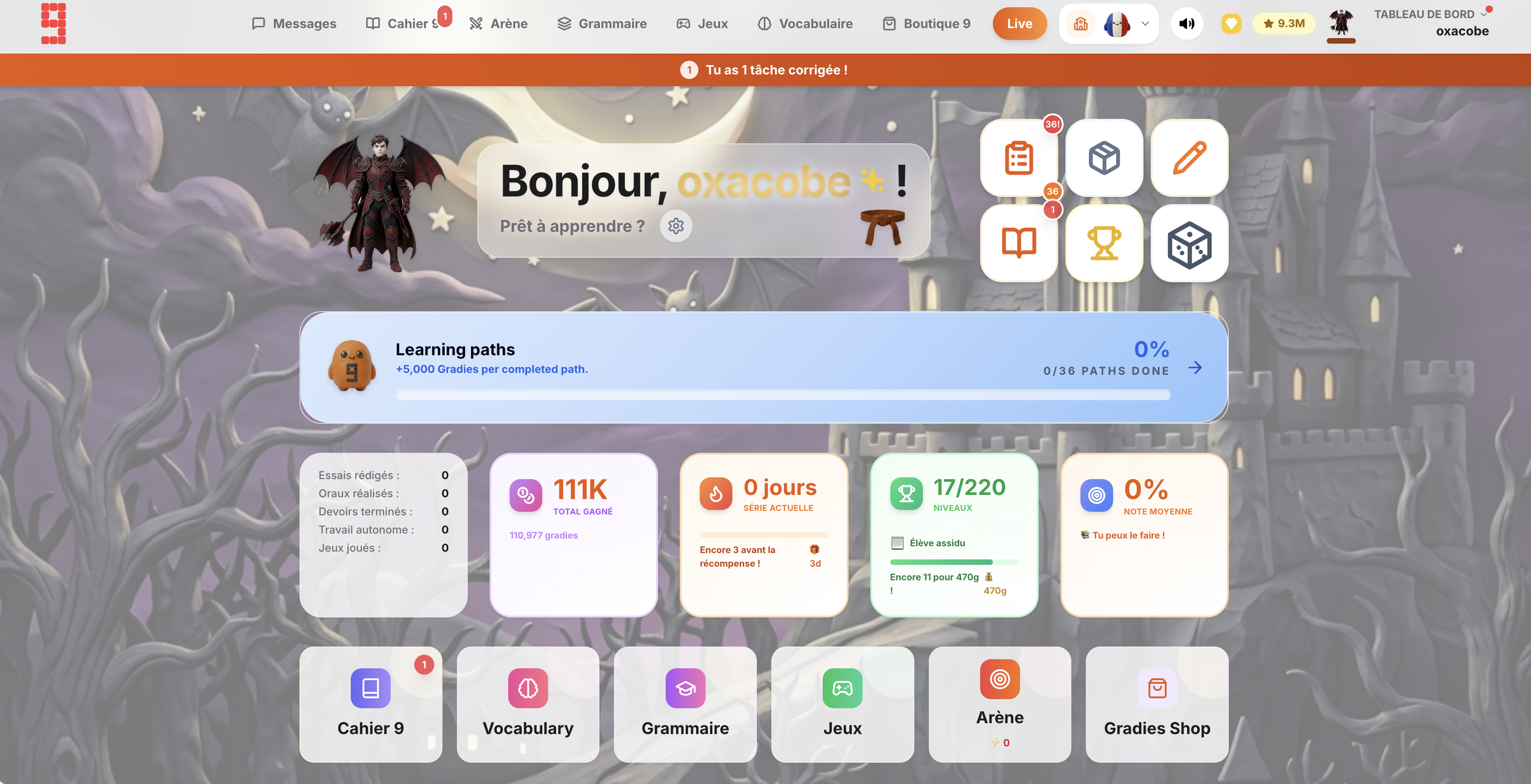
Spanish · French · German · Portuguese · Italian
Use the same platform architecture across the languages your department teaches, while keeping each class in its own language and curriculum context.
Explore language workflows →
From planning to progress, it all connects.
Curriculum management, assignments, AI feedback, printables, gradebook and lesson planning all sit inside the same Grade 9 environment.
Find the detail you need.
Open any section for the key facts, practical detail, examples and sources.
01Build the class around German from the start⌄
When a teacher creates a class, German is stored as the target language alongside the curriculum level. That language context then carries into later learning and assignment workflows rather than being chosen again independently each time.
This is especially useful where one department uses the same platform across several languages. A German class stays German even when the teacher moves between lesson planning, homework, live activities and progress evidence.
02Use German KS3 and GCSE planning data⌄
The built-in scheme-of-work system includes German within the verified MFL language set, including KS3 levels and GCSE planning data. Teachers can select the relevant German curriculum context and build lessons or resources from it.
The lesson workflow can therefore begin with the course structure rather than a generic AI prompt. A department that follows a different sequence can also use custom curriculum tools and teacher-created vocabulary.
03Practise vocabulary, grammar and translation in the same language context⌄
German vocabulary content is registered separately from the other target languages, and grammar availability is checked against the current language and curriculum. Where a capability exists, pupils can move between vocabulary, grammar, translation and wider independent practice without leaving the German learning context.
The platform also supports German-specific text entry, including umlauts and ß, so typed practice is not forced through an English keyboard assumption.
04Connect German speaking and writing to feedback⌄
German is supported by the current speaking-task and speaking-feedback services. Teachers can also set writing work and use AI-supported feedback as part of a teacher-reviewed workflow.
The aim is not to replace teacher judgement. It is to make shorter cycles of practice and feedback easier to run, especially when a class needs repeated work on accuracy, range and communication.
05Bring live retrieval, homework and progress together⌄
A German topic can feed into assignments, printable work, live games and later progress evidence. Teachers can set work for the whole class or selected pupils, see completion status and use the gradebook to review the evidence generated by those activities.
That makes it easier to see whether a topic has moved from recognition into more secure production instead of judging progress from one isolated test.
06German coverage is capability-based, not assumed⌄
Grade 9 does not claim that every language and level has identical vocabulary, grammar or generated-resource depth. The interface uses the active German curriculum and exposes the content and tools available for that context.
Where a department needs a different sequence, source or topic set, custom curriculum and teacher-created resources can sit alongside the built-in German structure.