 School





GCSE Spanish reading aloud: make the sounds reliable before adding speed
Prepare pupils for the GCSE Spanish reading aloud with current AQA and Pearson Edexcel rules, pronunciation routines, examples and follow-up question practice.
Grade 9 School brings curriculum, lesson planning, practice, homework, feedback, live activities, printables and progress tracking into one connected teaching workflow.
 Spanish
 French
 German
 Portuguese
 Italian
Practice, feedback and progress in one place.

The reading-aloud task is not a test of who can sound most theatrical in Spanish. It asks pupils to turn written Spanish into clear, comprehensible speech and then respond to questions linked to what they have read.
That changes how it should be taught.
Pupils need reliable sound-symbol correspondences, sensible phrasing and enough automaticity to keep going when they meet a less familiar word. They also need to remember that reading the text is only part of the task. Both AQA and Pearson Edexcel follow it with an unprepared spoken interaction.
There is also a major preparation-rule difference between the two boards. AQA pupils must not read the text aloud during supervised preparation. Pearson Edexcel explicitly gives pupils a final one minute in the examination room in which they may practise some or all of the read-aloud text aloud. Training the wrong routine is avoidable.
Explore the topic ↓
One platform for teaching, practice, feedback and progress.
Plan lessons, set homework, run live activities, generate printables, give AI-supported marking and track progress across Spanish, French, German, Portuguese and Italian.
Writing & speaking marking
Set writing and speaking tasks, collect submissions, generate detailed feedback and keep teacher review in the loop.
Explore this guide →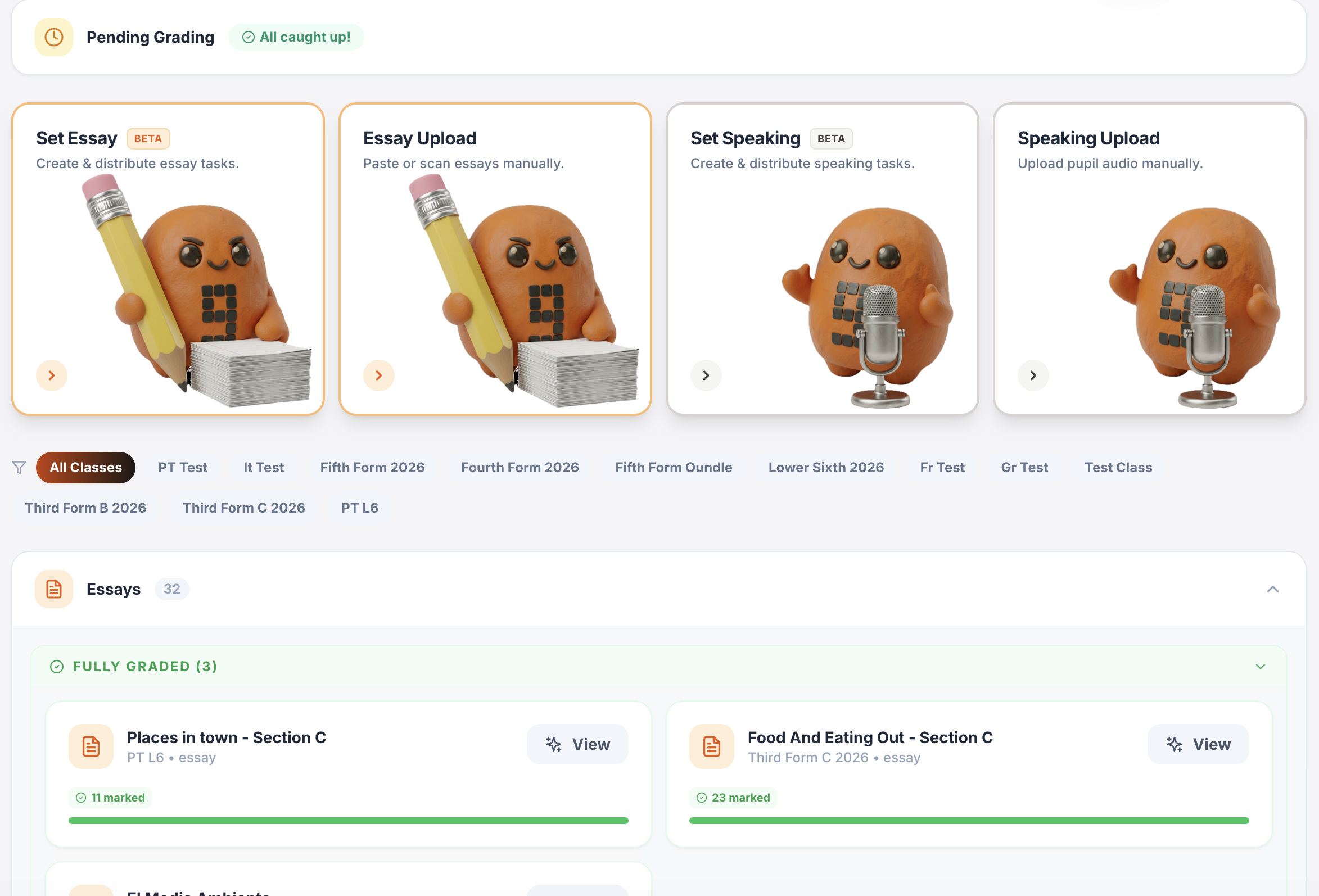
Gradebook & reports
Track scores, completion, engagement and learning evidence across classes.
Explore this guide →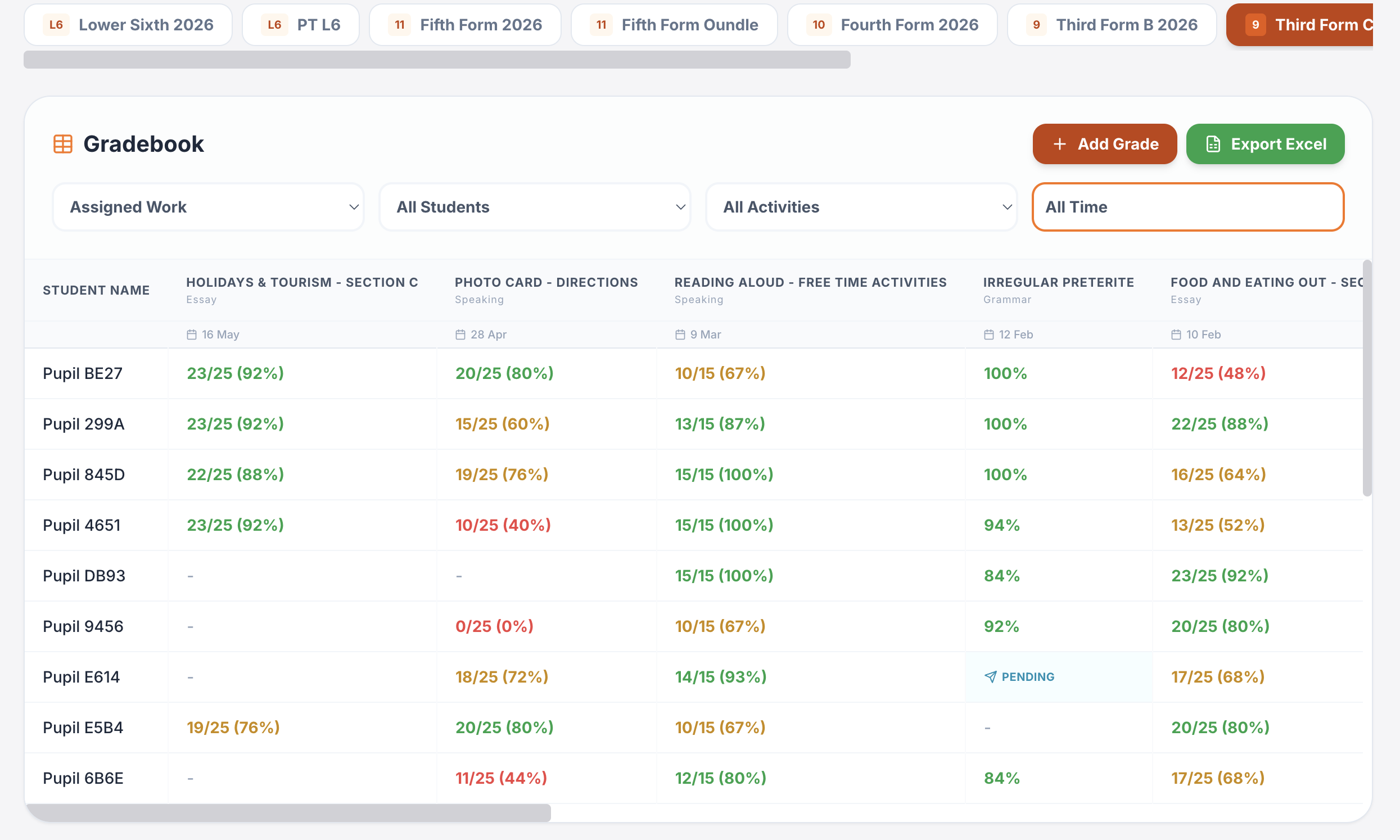
Interactive lessons
Generate, edit, save and reuse complete lesson presentations.
Explore this guide →Printables in seconds
Vocabulary, grammar, translation, reading, listening, worksheets and booklets.
Explore this guide →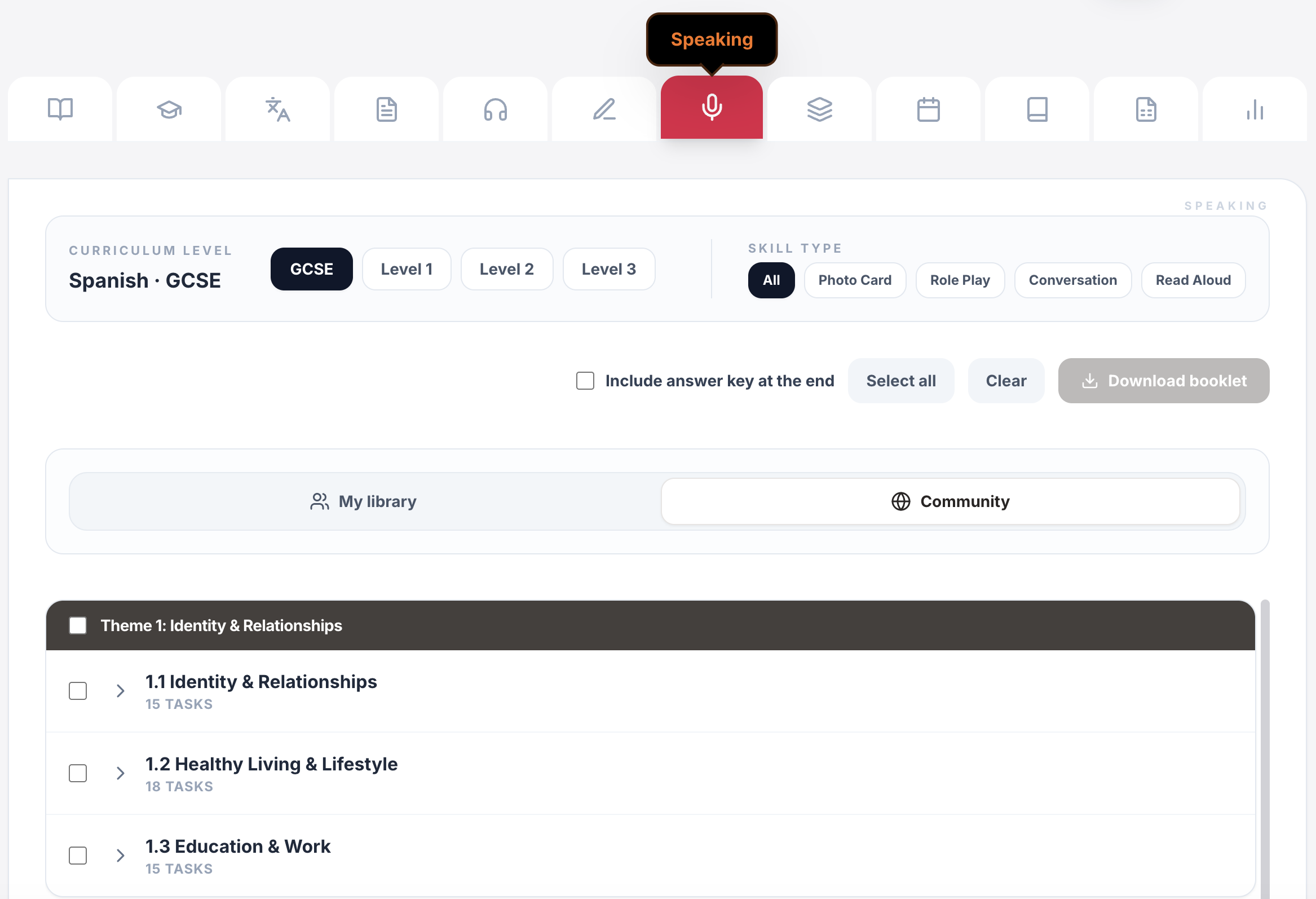
Live games & whiteboards
Turn curriculum content into whole-class competition, retrieval and live response.
Explore this guide →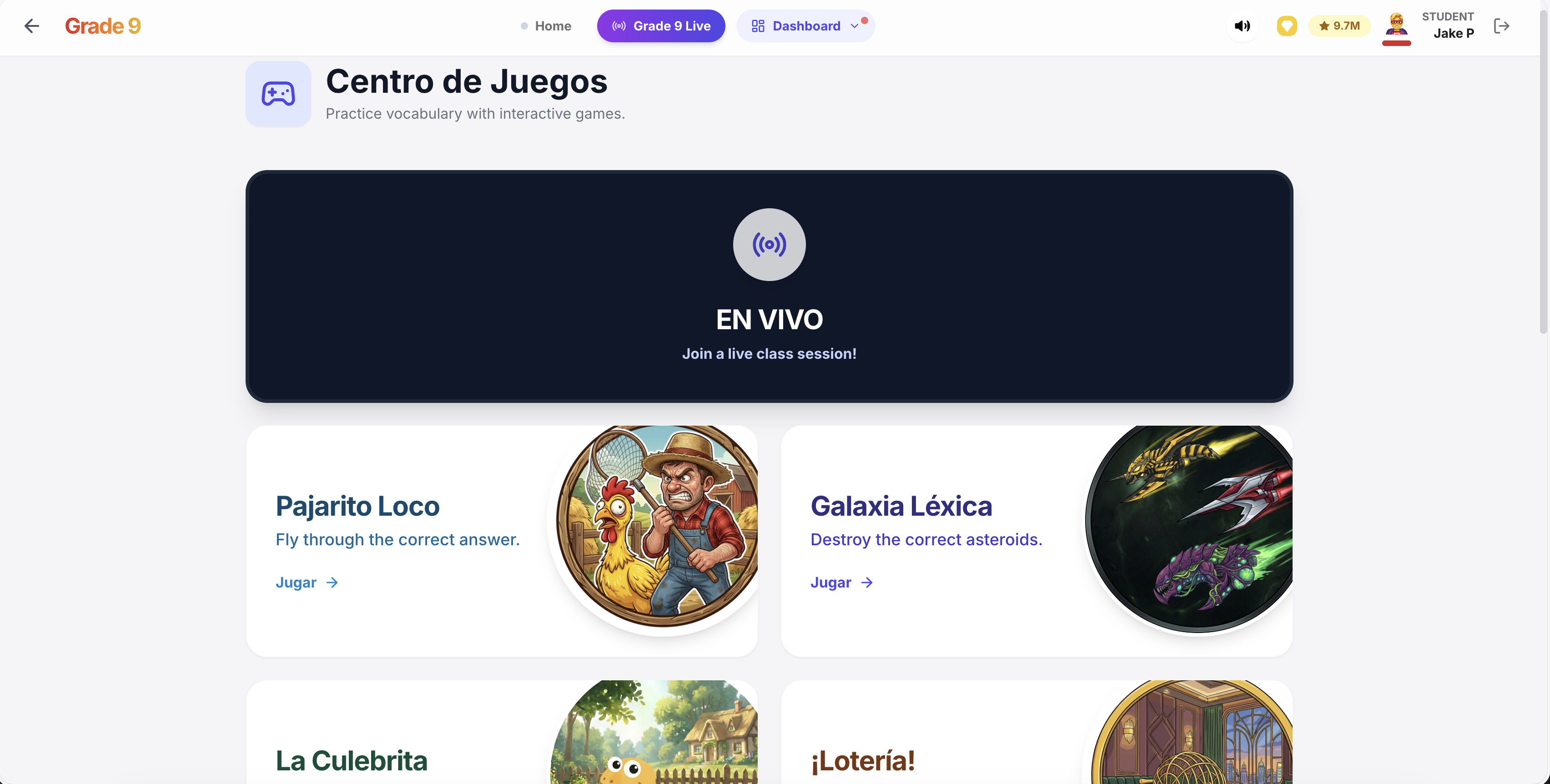
Assignments & tracking
Set work for a whole class or selected pupils, schedule it and see who has started or finished.
Explore this guide →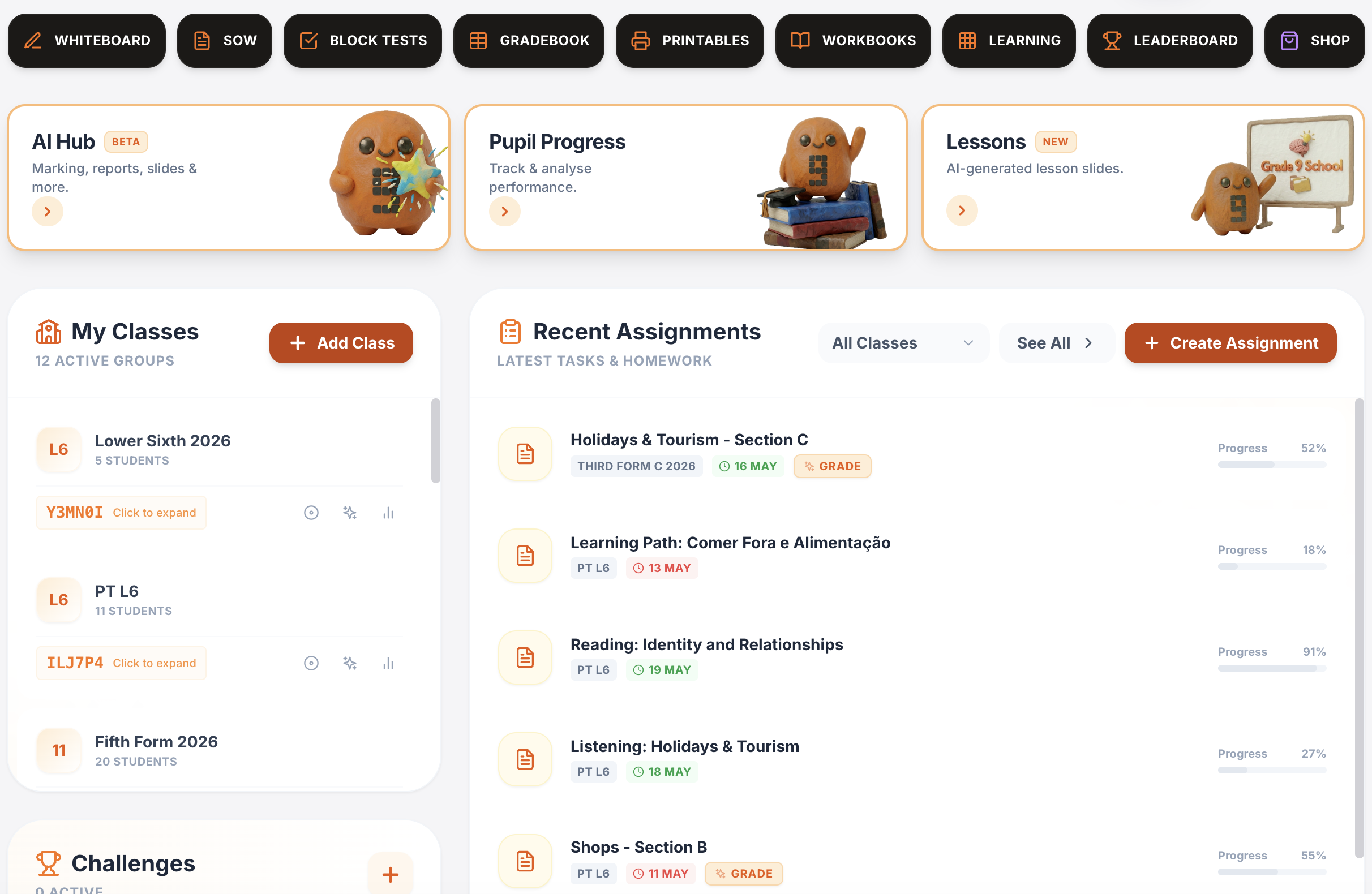
Vocabulary, grammar, translation & independent practice
Structured learning paths, flashcards, vocabulary builders, grammar, verb work, translation and tracked independent learning across supported languages.
Explore this guide →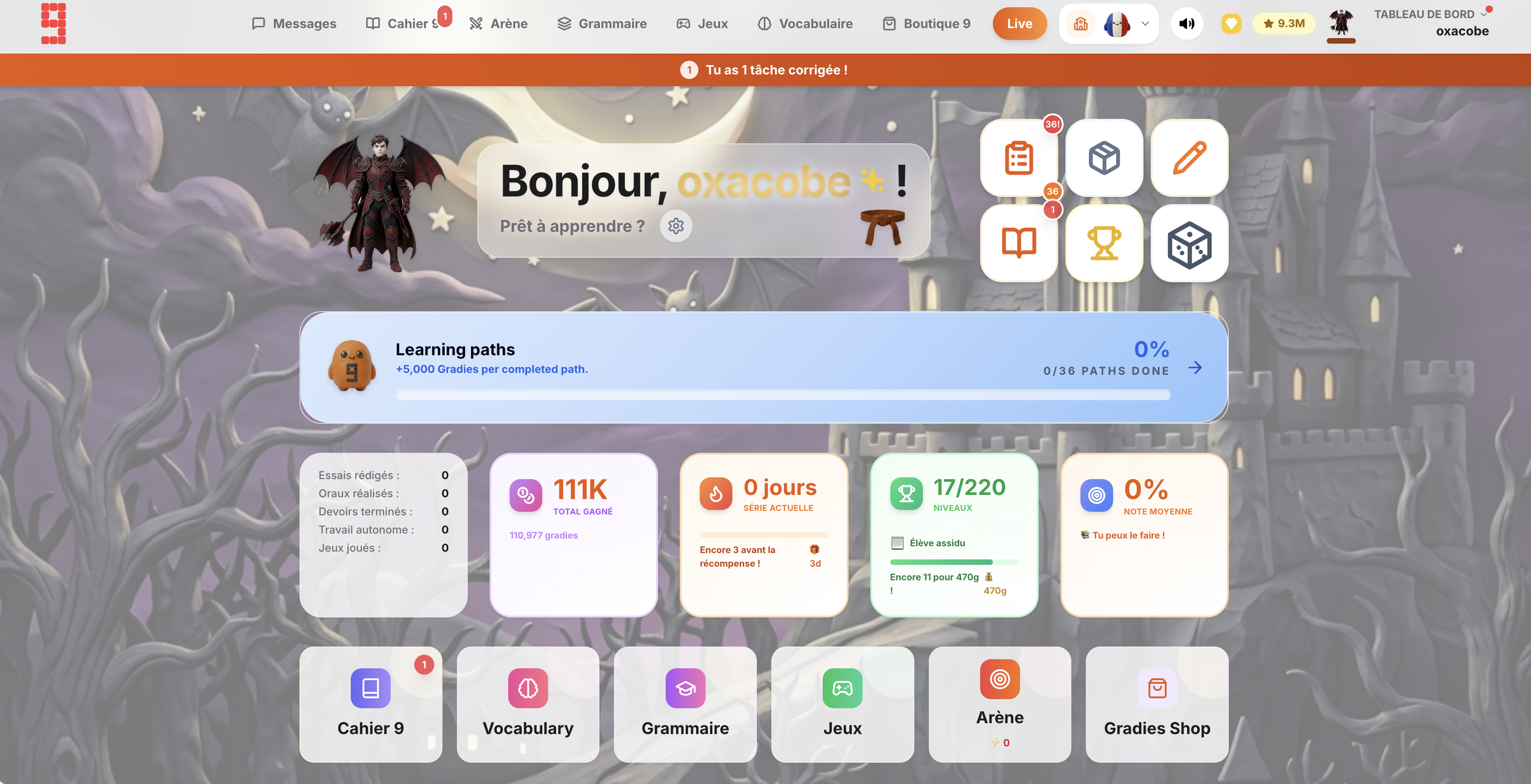
Spanish · French · German · Portuguese · Italian
Use the same platform architecture across the languages your department teaches, while keeping each class in its own language and curriculum context.
Explore language workflows →
From planning to progress, it all connects.
Curriculum management, assignments, AI feedback, printables, gradebook and lesson planning all sit inside the same Grade 9 environment.
Find the detail you need.
Open any section for the key facts, practical detail, examples and sources.
01AQA and Pearson Edexcel: current task demands⌄
AQA GCSE Spanish 8692
The reading-aloud task and short conversation are worth 15 marks in total.
At Foundation tier, the text contains at least 35 words and the whole reading-aloud-plus-conversation section is recommended to last 2 to 2.5 minutes.
At Higher tier, the text contains at least 50 words and the section is recommended to last 3 to 3.5 minutes.
The reading itself is worth 5 marks for pronunciation. It is followed by four compulsory questions on the topic of the text. The teacher asks those questions exactly as written in the Teacher's Booklet, and the four responses are marked as a whole rather than as four separate mini-items.
AQA states that pupils must not read their text aloud during the supervised preparation period.
Official source: AQA GCSE Spanish 8692 Scheme of Assessment
Pearson Edexcel GCSE Spanish 1SP1
Pearson Edexcel's read aloud is Task 1 and is worth 12 marks.
The short passage is worth 8 marks and the two straightforward unprepared questions that follow are worth 4 marks.
At Foundation tier, the text is 35 to 40 words in five sentences and the task is recommended to last 1.5 to 2 minutes.
At Higher tier, the text is 50 to 55 words in four sentences and the task is recommended to last 2 to 2.5 minutes.
The two follow-up questions are in the present tense at both tiers and are designed to elicit brief likes, dislikes or opinions based on the overall content of the passage.
Pearson's preparation rules are particularly important. Pupils have 15 minutes' supervised preparation, and the final one minute should take place in the examination room. During that final minute they may practise selected words, phrases, sentences or the whole read-aloud text aloud. That minute is not assessed, but it forms part of the continuous recording. Pupils may also annotate the text during preparation.
Official source: Pearson Edexcel GCSE Spanish 1SP1 Specification, Issue 2
02The teaching priority: predictable decoding⌄
A strong reader should not need to have memorised the exact passage.
The more useful aim is: when a pupil sees a familiar spelling pattern, the likely Spanish sound comes out automatically enough for the listener to understand.
That means reading-aloud preparation should be built into normal vocabulary and phonics teaching, not saved for a frantic mock-exam week.
Useful habits include:
- keep Spanish vowel sounds stable instead of allowing English vowel drift;
- notice letter combinations and syllables before attempting the whole sentence;
- use written accents as useful information rather than decoration;
- chunk a sentence into meaningful groups instead of reading one word at a time;
- pause at punctuation, but do not insert long pauses between every word;
- slow down when accuracy is beginning to collapse;
- keep moving after a small error rather than restarting the whole line.
The target is comprehensibility and control.
03A five-minute sound routine that can happen all year⌄
Choose four or five words from the current topic that contain useful sound-spelling patterns.
For example:
gente
jugar
quiere
ciudad
trabajo
Then run the sequence:
- Teacher models once.
- Class identifies the part most likely to be misread.
- Pupils read individual words.
- Put each word into a short phrase.
- Put the phrase into a sentence.
- One pupil reads the sentence cold.
The point is to move from sound to connected speech quickly. Ten isolated repetitions of gente are less useful than being able to read La gente joven quiere viajar without freezing.
04Original classroom mini-text⌄
This is an original practice text, not exam-board material:
Vivo en una ciudad bastante tranquila, pero los fines de semana hay mucho que hacer. Normalmente voy al polideportivo con mis amigos porque me encanta jugar al baloncesto. El sábado pasado fui al cine con mi hermana. El próximo fin de semana vamos a visitar un mercado nuevo.
Before reading, a pupil might mark:
- ciudad
- tranquila
- hacer
- jugar
- hermana
- próximo
Then they should decide where the sense groups fall.
For example:
Vivo en una ciudad bastante tranquila / pero los fines de semana / hay mucho que hacer.
That is more useful than adding invented phonetic spellings above every word. The goal is to make the Spanish spelling system more familiar, not replace it with a second code the pupil also has to decode.
05Teach pupils to diagnose errors⌄
When a pupil mispronounces a word, avoid always supplying the answer immediately.
Ask:
- Which letters are creating the problem?
- Have you seen that spelling pattern in another word?
- Which syllable carries the stress?
- Did the error change comprehensibility, or was it a smaller accent feature?
- Can you now read the whole phrase without stopping?
This turns correction into something transferable.
A pupil who fixes one word because the teacher models it may fix one word. A pupil who notices the pattern may fix the next five words independently.
06The follow-up questions are not an afterthought⌄
A common teaching mistake is to spend ten minutes on pronunciation and thirty seconds on the interaction that follows.
AQA pupils answer four compulsory questions after the text. Pearson Edexcel pupils answer two straightforward unprepared questions that elicit brief opinions.
The safest response routine is:
Answer -> add one useful detail -> stop.
Example:
Teacher: ¿Te gusta hacer deporte?
Pupil: Sí, me encanta hacer deporte porque juego al baloncesto con mis amigos.
That response is short enough to control but developed enough to show real communication.
The next step is to vary the question so the pupil has to listen:
- ¿Qué deporte prefieres?
- ¿Con quién haces deporte?
- ¿Es importante hacer ejercicio?
- ¿Qué haces normalmente los fines de semana?
Do not show every question on screen. The assessment interaction is unprepared.
07Six classroom routines that build the skill⌄
1. Cold-read thirty seconds
Give pupils a short unseen paragraph from familiar vocabulary. They have thirty seconds to scan, then read.
This exposes whether sound-spelling knowledge transfers beyond memorised texts.
2. Tricky-word triage
Before reading, pupils may mark only three words. They must choose the three most likely to cause trouble.
This forces useful prioritisation rather than covering the page in annotations.
3. Record, listen, repair
Pupil reads once into a recorder, listens back and chooses one specific pronunciation target. They then record a second attempt.
The second attempt should have one measurable purpose. "Sound better" is too vague.
4. Punctuation reading
Remove normal pauses by displaying the passage as one block, then ask pupils to add slash marks where a speaker would naturally group meaning.
Read the original again and compare.
5. Question ambush
After any class reading, ask two unprepared questions about its topic. This prevents pupils from thinking "reading aloud" ends at the full stop.
6. Board-accurate mock preparation
Practise the actual preparation conditions.
For AQA: silent preparation. The pupil must not rehearse the text aloud during that supervised preparation.
For Pearson Edexcel: reproduce the final one-minute opportunity to practise the text aloud in the exam room.
The distinction matters enough to teach explicitly.
08What pupils commonly get wrong⌄
They read too fast
Speed can create the impression of confidence until consonants, vowels and word endings disappear.
Fix: set a comprehensibility target, not a speed target. Record two versions and ask which is easier to understand.
They read one word at a time
Every word may be individually recognisable, but the sentence becomes hard to follow.
Fix: add sense-group slashes and read the phrase rather than isolated tokens.
They panic at one unfamiliar word
The pupil stops, restarts and loses the rhythm of the whole passage.
Fix: practise "best attempt and continue". A single uncertain word should not destroy the rest of the reading.
They treat accents as optional spelling marks
Written accents can help the reader identify stress.
Fix: include accent recognition in normal vocabulary retrieval, not only in pronunciation lessons.
They finish the text and switch off
Both boards continue into an unprepared interaction.
Fix: every classroom reading-aloud practice should end with at least one spoken question.
They rehearse aloud in AQA preparation
AQA explicitly prohibits reading the text aloud during the supervised preparation period.
Fix: practise silent marking strategies: spotting challenging words, stress, chunks and notes.
They fail to use Pearson Edexcel's final minute
Pearson explicitly provides a final minute in the exam room in which pupils may practise all or part of the text aloud.
Fix: rehearse what to do with that minute. Start with the words or sentence most likely to fail, not automatically with line one.
09A practical preparation routine⌄
For AQA
- Scan the whole text silently.
- Mark unfamiliar or high-risk words.
- Identify known sound-spelling patterns inside those words.
- Mark sentence chunks and useful stress cues.
- Prepare concise ideas for the topic area without trying to predict the four exact questions.
- Do not read the text aloud during supervised preparation.
For Pearson Edexcel
- Scan the whole text.
- Annotate words that need pronunciation attention.
- Mark useful sentence chunks.
- Prepare for brief opinion questions related to the content.
- Decide before entering the exam room which word, phrase or sentence most needs the final one-minute aloud rehearsal.
- Use that minute deliberately.
10Using Grade 9 School for reading-aloud practice⌄
The current Grade 9 speaking creator includes reading aloud as a supported task family. A teacher can create or edit a task, set it to pupils and collect recorded responses.
That makes one useful routine easy to repeat: first recording, targeted correction, second recording.
The original audio remains the important evidence. Automated transcription can help organise feedback, but it can mishear accents, hesitation or unclear audio. A teacher reviewing pronunciation should listen to the recording rather than treating a clean transcript as proof that the sounds were accurate.
A useful implementation would keep the technology almost invisible:
one short task -> pupil recording -> one pronunciation target -> re-record.
The pedagogical value comes from the comparison between attempts.
11Quick teacher checklist⌄
A pupil is becoming ready when they can:
- apply familiar Spanish sound-spelling patterns to an unseen passage;
- keep vowel sounds reasonably stable;
- use written accents and punctuation as reading cues;
- group words into meaningful phrases;
- continue after one uncertain word;
- answer unprepared topic questions after reading;
- follow the correct preparation rule for their exam board;
- listen to their own recording and identify one specific improvement.
12Frequently asked questions⌄
Can AQA pupils practise the reading aloud out loud during preparation?
No. AQA states that pupils are not permitted to read the text aloud during supervised preparation.
Can Pearson Edexcel pupils practise it aloud?
Yes, in a specific way. Pearson gives a final one minute of the 15-minute preparation period in the examination room. Pupils may practise selected parts or the whole read-aloud text aloud. The minute is recorded but not assessed.
Is the reading-aloud task only pronunciation?
No. Both boards follow the reading with spoken questions. AQA uses four compulsory questions; Pearson Edexcel uses two straightforward unprepared questions.
Should pupils learn phonetic transcriptions?
They need dependable Spanish sound-symbol correspondences. A separate phonetic code can help some specialist teaching, but it should not become a crutch that prevents pupils reading normal Spanish spelling. The exam gives them Spanish text, so normal spelling must become usable.